North Korean state media has reported the successful firing of two air defense missiles, emphasizing their "superior combat capability" and "unique technology", according to the Korean Central News Agency (KCNA). The test, which occurred on Saturday, highlighted the projectiles' effectiveness against aerial threats, including drones and cruise missiles. This announcement comes just hours after South Korean forces fired warning shots at North Korean troops who briefly crossed into the Demilitarized Zone (DMZ), a highly fortified border separating the two nations. The United Nations Command noted that approximately 30 North Korean soldiers crossed this sensitive line, leading to accusations from Pyongyang of "deliberate provocation" by Seoul.
Tensions were further exacerbated as South Korea and the United States engaged in extensive joint military exercises. Meanwhile, US President Donald Trump is scheduled to meet South Korean President Lee Jae Myung for a summit in Washington on Monday. President Lee’s recent election pledged to enhance inter-Korean relations; however, this initiative faced immediate setbacks when Kim Jong Un's sister dismissed overtures for reconciliation from Lee's administration.
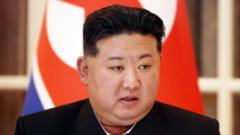
Earlier this month, Kim condemned the US-South Korean military drills, labeling them "hostile and confrontational," while doubling down on his objective to expand North Korea's nuclear arsenal. Notably, North Korea previously claimed to have tested an intermediate-range ballistic missile equipped with a hypersonic warhead, asserting its capability to counter rivals in the Pacific.
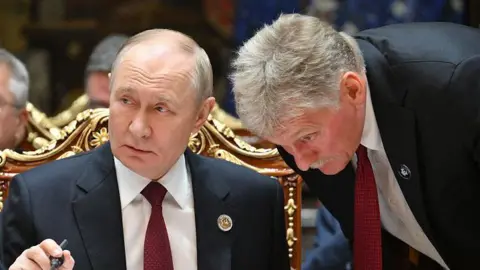
Concerns have been raised regarding North Korea's potential acquisition of Russian missile technology, particularly after claims that Moscow provided military equipment in exchange for North Korean support in the ongoing conflict in Ukraine. However, it remains uncertain whether the latest missiles involve any such foreign technology.
North Korea perpetuates its reputation as one of the most oppressive totalitarian states globally, as the Kim family has maintained a tight grip on power for decades. Despite the Korean War ending in 1953, which left the peninsula divided, a formal peace treaty was never signed, leaving both nations in a prolonged state of military readiness and tension.