In brief
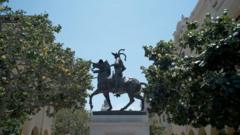
Lima's Plaza de Armas recently welcomed back the statue of Spanish conquistador Francisco Pizarro, which had been removed over two decades ago. The event commemorated the city's 490th anniversary, but it has ignited protests from Indigenous leaders who view Pizarro as a symbol of colonial oppression.
The article text: A statue of Spanish conquistador Francisco Pizarro has been reintroduced in the heart of Lima, Peru, marking a significant and contentious moment in the nation's historical discourse. The unveiling ceremony took place as part of the city's 490th anniversary, celebrating its foundation in 1535 following Pizarro's conquest of the Inca Empire. Critics of the statue's reinstatement, including various Indigenous leaders, argue that Pizarro symbolizes the destruction of native cultures and mass violence inflicted upon Indigenous populations. They contend that such monuments perpetuate a narrative of colonialism that overlooks the suffering of countless ancestral communities. In contrast, supporters assert that the statue's return is crucial to preserving Peru's historical narrative, emphasizing the need to acknowledge all facets of the past rather than erase it completely.The statue, which depicts Pizarro triumphantly on horseback with sword drawn, was initially gifted in 1935 by American sculptor Charles Rumsey's widow to celebrate Lima’s fourth centenary. However, in 2003, it was relocated to a less prominent area near train tracks due to rising calls for its removal. The vulnerabilities of its condition grew apparent after exposure to the elements and vibrations from passing trains, leading to visible damage over the years.The bronze statue was rededicated in the city’s main square, Plaza de Armas, by Lima’s Mayor Rafael López Aliaga and Isabel Díaz Ayuso, the president of Madrid’s Community, in the presence of Mr. Bogdanovich, who oversaw restoration efforts. During the ceremony, Díaz Ayuso remarked on the historical significance of the event, characterizing it as a celebration of cultural exchange and transformation. Nonetheless, the event stirred controversy as dozens of demonstrators gathered to voice their opposition outside the proceedings, framing the statue's return as a regressive affront to Indigenous rights. One protester condemned it as "an offense to all the indigenous peoples of Peru, Latin America, and the world."As the statue now stands at the center of conflict, the dialogue around colonial histories against the backdrop of modern activism continues, reflecting Peru's complex relationship with its past.