In brief
Abida Sultaan, born into Bhopal's royal family in 1913, challenged societal norms by pursuing a life of independence as an accomplished polo player and politician. Her journey, marked by defiance against purdah and a tumultuous marriage, ultimately led to her advocacy for women’s rights and democracy in Pakistan, leaving behind a compelling legacy.
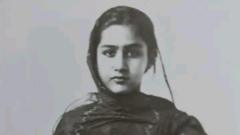
Abida Sultaan, the firstborn of the last Nawab of Bhopal, Hamidullah Khan, remains an emblem of courage and defiance against gender norms. Born in 1913, she distinguished herself from the traditional image of a princess by embracing a lifestyle filled with adventure, sports, and leadership. Abida was not only an ace polo player but also a skilled marksman and the proud owner of a Rolls-Royce at the tender age of nine.Growing up in a family of influential 'begums' who ruled Bhopal for over a century, Abida was molded into a resourceful and resilient leader. She took on the mantle of heir to the throne at just 15, firmly rejecting the restrictive purdah that kept many women secluded. Under the watchful eye of her grandmother, Sultan Jehan, Abida was trained to be a ruler, balancing a rigorous regimen of Quranic studies, sports, and household responsibilities.Known for her fierce independence, Abida boldly resisted her grandmother's attempts to confine her, emerging as a notable figure in the male-dominated realm of politics. At the age of 12, she entered a brief marriage to Sarwar Ali Khan, yet her innocence about marriage and sexuality led to severe challenges. In her candid autobiography, "Memoirs of a Rebel Princess," she recounted the emotional turmoil she faced, revealing intimate struggles often silenced in writings from Muslim women.After her marriage crumbled, Abida returned to Bhopal, only to find herself embroiled in a protracted custody struggle over her son, Shahryar Mohammad Khan. Taking matters into her own hands, she staged a dramatic confrontation with her ex-husband, ultimately ensuring she could raise her child independently while maintaining her royal duties.Her political acumen shone through as she participated in critical round-table discussions during India's independence movement, where she met iconic leaders such as Mahatma Gandhi. Yet, with the Partition of India in 1947, she witnessed firsthand the rising tensions and violence between communities, which fueled her decision to immigrate to Pakistan in 1950. There, Abida continued her advocacy for democracy and women’s rights, shaping societal progress until her passing in 2002.Though her time in Bhopal is now overshadowed by contemporary political discourse, Abida Sultaan’s legacy as a pioneering Muslim woman leader endures. Known affectionately as 'bia huzoor,' her influence remains ingrained in the history of Bhopal, serving as a potent reminder of the determination and spirit of women breaking barriers across generations.