In brief
Marine experts cite challenging conditions and high stress levels as factors in this heartbreaking situation.
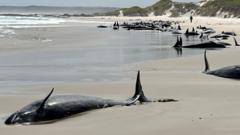
In a tragic event that highlights the vulnerabilities of marine life, over 150 false killer whales have been stranded on a remote beach in Tasmania, Australia. The incident occurred near Arthur River in the island’s northwest, where Tasmania's Department of Natural Resources and Environment reported that after extensive evaluation, 90 of the 157 stranded whales are still alive but critically endangered. Efforts to rescue these creatures have been thwarted by difficult conditions, and the survival chances appear grim.Witnesses described the heartbreaking sight of the whales, including juveniles, showing signs of distress while calling out for help. A local resident, Jocelyn Flint, recounted her emotional experience witnessing the stranded pod, stating, "There are babies... Their eyes are open, they're looking at me, like 'help.' It's just absolutely horrific."Marine biologist Kris Carlyon emphasized the significant challenges posed by the location, marking it as one of the toughest he has encountered in his 16 years of experience in Tasmania. The area is noted for its rough terrain and constrained access, complicating rescue efforts. Despite attempts to guide two whales back to the ocean, they continually reverted toward the beach due to the turbulent waters.As conditions are expected to remain unfavorable, a difficult decision was made by wildlife veterinarians to euthanize the remaining whales to prevent prolonged suffering. Dr. Carlyon explained that euthanasia is considered only as the last resort when all other options fail, affirming the urgency of the situation.The plan for disposing of the euthanized whales is ongoing, with authorities acknowledging the cultural significance of the site for Aboriginal communities. While the public has been advised to stay away from the area due to nearby bushfires and access complications, the heartbreaking reality remains that Tasmania experiences the highest frequency of whale strandings in Australia. Experts speculate on various reasons for these mass beachings, suggesting that disorientation while foraging for fish or a single individual's misguided navigation could lead entire pods to shore. This event serves as a stark reminder of the fragility of marine ecosystems and the challenges they face amidst ongoing climate and environmental pressures.