In brief
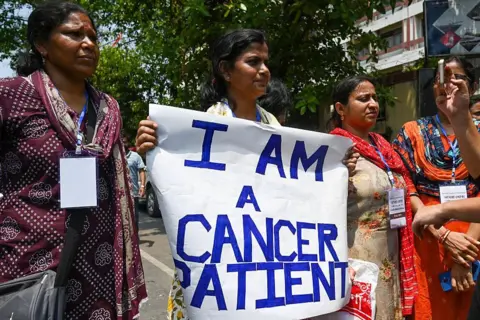
In India, women account for more than half of all new cancer cases, but men are suffering higher mortality rates. This disparity stems from factors such as lifestyle choices, access to healthcare, and gender-specific health campaigns. Notably prevalent cancers include breast and cervical for women, and oral and lung for men, with social habits contributing to the rising incidence. This article examines the complex landscape of cancer in India, highlighting the need for targeted health interventions.
Women in India are more likely to get cancer. Men are more likely to die from it.
The paradox, revealed in a study of the country's latest cancer registry, tells a story at once simple and confounding.
Women account for just over half of all new cases, but men make up the majority of deaths.
India appears to be an outlier. In 2022, for every 100,000 people worldwide, on average about 197 were diagnosed with cancer that year. Men fared worse, at 212, compared to 186 for women, according to the World Cancer Research Fund.
In India, the most common cancers among women are breast, cervical, and ovarian. Breast and cervical cancers make up 40% of female cases.
For men, oral, lung, and prostate cancers dominate, with tobacco driving 40% of preventable cancers.
A major contributing factor to the mortality difference is that awareness campaigns and improved facilities lead to earlier detection among women. This results in better outcomes and lower mortality rates.
However, men are less likely to seek preventive check-ups or early medical help, resulting in poorer treatment outcomes.
The cancer burden is unevenly distributed across various Indian regions. For instance, the northeast region is identified as India's cancer hotspot, where lifestyle factors like tobacco use significantly elevate cancer risks.
Across regions, data indicate nearly 1.56 million new cancer cases and 874,000 deaths are projected for 2024, necessitating urgent public health efforts to tackle cancer prevalence and inequality in treatment access.