In brief
As internet blackouts impact millions across Africa, the Léon Thévenin, a ship dedicated to repairing undersea cables, plays a vital role in ensuring the continent remains digitally connected. With a crew of skilled technicians, the ship responds to cable damages caused primarily by human activities, natural disasters, and extreme weather conditions, working tirelessly to keep the internet operational.
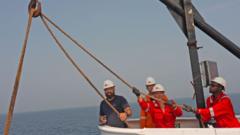
The vastness of the African ocean may conceal an invisible lifeline for the continent and its people: the Léon Thévenin. This giant ship, measuring the length of a football field, hosts over 50 highly skilled engineers and technicians dedicated to repairing critical undersea internet cables that connect Africa to the rest of the world. The ship's mission has never been more urgent, especially since the recent internet outages that left millions without access to essential services such as banking and messaging.The Léon Thévenin has spent 13 years navigating the oceans surrounding Africa, providing a valuable service that maintains the region's digital connections. "Because of me, countries stay connected," says South African cable jointer Shuru Arendse, who has dedicated a decade to this specialized work aboard the Léon Thévenin. His proud statement captures the essence of the crew's commitment to keeping communication alive across the continent.The undersea cables that the Léon Thévenin services are crucial for transmitting data, connecting users to servers that store everything from social media accounts to banking information. However, these cables are susceptible to damage mostly due to human activity, such as improper anchoring by ships and the sweeping actions of fishing trawlers. Natural disasters, especially in regions with extreme weather, also pose a constant threat.The recent history of cable damage reveals the precarious state of Africa's internet connectivity. A year ago, three vital cables in the Red Sea were severed, disrupting connectivity for millions in East Africa. Just weeks later, additional cables were damaged off West Africa, further compounding the issue. Each incident results in significant service interruptions before the Léon Thévenin can intervene.Once alerted to a damaged cable, the team aboard the Léon Thévenin prepares for rapid deployment, with the goal of reaching affected areas within 24 hours, contingent upon permits and availability of spare cables. The crew is capable of performing repairs at ocean depths of up to 5,000 meters, a testament to their expertise and readiness. As they cruise along the African coastlines, they often work for weeks to repair problematic cables while navigating complex bureaucracy to gain access to repair sites.The ship's advanced remotely operated vehicle (ROV), weighing nearly 10 tons, is deployed to locate faulty sections of the undersea cables. Once located, the crew compares fault types to gauge how to repair the damage, whether it be a break in the fibreglass cores or issues with insulation. Every repair is a nuanced process, and the crew's efficiency ensures minimal disruption to users above the surface, rerouting traffic through other functioning cables.But the importance of their work comes with personal sacrifices. Crew members hail from diverse backgrounds, each bringing their experiences onboard. Many share stories of missed family milestones and personal challenges, all driven by a sense of duty to support families back home. As they balance camaraderie with the harsh realities of life at sea, they recognize their vital role in connecting Africa to the digital world."We are the link between Africa and the world,” states Ferron Hartzenberg, chief engineer aboard the Léon Thévenin, encapsulating the essence of their mission as they continue to traverse the ocean, safeguarding the continent's internet connectivity for future generations.