In brief
As rumors of ill health swirl around prominent African leaders, including Cameroon's Paul Biya and Malawi's Lazarus Chakwera, the responses reveal a pervasive culture of secrecy tied to power retention. Experts point out that this practice hinders political succession and disproportionately impacts women in politics while emphasizing the need for transparency to serve the interests of the citizenry.
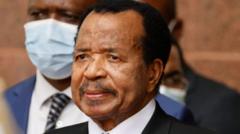
Despite age and health concerns, African leaders continue to uphold an image of invincibility, seeing their well-being as intimately linked to their nations' stability. Recent instances involving President Paul Biya of Cameroon and Malawi's President Lazarus Chakwera underline a common refusal to disclose personal health details, prompting a broader discussion among analysts about the implications of such secrecy.Biya, who has ruled Cameroon since 1982, faces rumors about his health, yet officials deny any issues, suggesting he remains in “excellent health.” Notably, the Cameroonian media has been restricted from reporting on this matter, reinforcing the culture of silence. On the other hand, Chakwera countered rumors with public displays of fitness, such as jogging and doing push-ups, portraying a contrasting approach aimed at maintaining an image of vigor and strength.Miles Tendi, an associate professor at Oxford University, asserts that this need for a strong public persona is rooted in "masculinity" in politics, which not only affects men in power but also discourages female representation. Currently, Samia Suluhu Hassan of Tanzania stands alone as the only female head of state on the continent.The secrecy surrounding health issues often stems from fears that any admission of frailty could embolden rivals and disrupt political stability. Adekeye Adebajo from the University of Johannesburg explains that the perception of a leader's health as an indicator of national strength can lead the leaders to treat health matters as state secrets.Historical instances like the concealment of President Laurent-Désiré Kabila's assassination or the delayed acknowledgment of President Bingu wa Mutharika's death highlight the turmoil associated with power vacuums. In more stable political environments, such as Zambia and Ghana, transitions following presidential deaths have occurred with relative smoothness, showcasing a disparity across the continent.The trend of leaders shunning transparency over health is perhaps most critically highlighted by the narratives surrounding presidents like Nigeria's Umaru Yar’Adua, who remained hidden from public view, or Zimbabwe’s Robert Mugabe, who dismissed health rumors as baseless media fabrication. While some leaders, such as Nigeria’s Muhammadu Buhari, have shown occasional openness regarding their health, such cases remain exceptions rather than the rule.With the younger generations in Africa increasingly demanding accountability from their governments, voices advocating for transparency in leadership health are growing. Citizens like Nigerian farmer Abeku Adams emphasize the public’s right to information about their leaders, seeing this as essential for fostering trust in governance.As elections loom, the pressure to outwardly demonstrate control and health remains high, particularly for leaders like Chakwera, whose image may directly influence electoral outcomes. Conversely, Biya's long tenure appears insulated from such pressures, bolstering the illusion of invulnerability.In a political landscape often characterized by autocracy and paternalism, calls for transparency are rising, urging leaders to prioritize public welfare over personal ambition. Analysts contend that in an ideal democratic framework, the health of a leader would be readily shared with the citizens, paving the path for a more accountable and robust political dialogue.