In brief
During a poignant ceremony marking 80 years since the liberation of Auschwitz, survivors recalled their harrowing experiences, urging current and future generations to combat discrimination and preserve the memory of the Holocaust. World leaders, including King Charles III, attended this somber event, reflecting on the responsibilities of remembrance in an era where these stories are at risk of fading away.
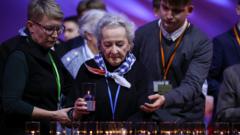
At a solemn gathering in Auschwitz, survivors of one of history's darkest chapters shared their stories, delivering powerful reminders that vigilance against intolerance is paramount as the world marks the 80th anniversary of the camp's liberation. The memories of those who lived through the horrors of the Holocaust are dwindling, with 56 survivors attending a ceremony aimed at stemming the tide of forgetting."We were stripped of all humanity," declared Leon Weintraub, the oldest survivor present at 99, as he recounted the tragic events near the infamous Death Gate of Birkenau. Reflecting on the moral void experienced during the Nazi regime, he urged the younger generation to remain “sensitive to all expressions of intolerance and resentment” towards those who are different.The Auschwitz-Birkenau extermination camp was a site of unimaginable suffering, with Nazi forces executing 1.1 million individuals between 1941 and 1945—predominantly Jews. Survivors like Tova Friedman, who was just five years old when she witnessed the brutalities around her, recounted scenes of horror that remain etched in their minds, emphasizing the lessons that must not be forgotten. Survivor Janina Iwanska, who experienced the atrocities firsthand, recalled the chilling decisions made by the infamous “Angel of Death,” Josef Mengele, who condemned the remaining Roma to death for his experiments. Together with Marian Turski and other survivors, they echoed the sentiment that only a few have escaped the grip of this historical monster, acknowledging that millions of voices are silenced forever.Piotr Cywinski, director of the Auschwitz museum, highlighted the critical need to remember, stating, "Without memory, you have no history." His call was echoed by Polish President Andrzej Duda, who pledged Poland's commitment to safeguard the sites of remembrance across the country.International leaders, including King Charles III, engaged in solemn observances, offering their condolences and solidarity. The events at Auschwitz carried profound significance as they reminded attendees that the fight against hatred and denial remains urgent. United Nations Secretary-General António Guterres underscored a pressing challenge of our time: "Remembrance is not only a moral act; it’s a call to action." Various surveys highlight rising concerns about the potential for history to repeat itself, amid troubling currents of antisemitism.As the conversations around tolerance and understanding resume, survivors like Mala Tribich, now 94, cautioned against the ramifications of hateful ideologies which can perpetuate cycles of violence. Turns to remembrance can serve as a beacon of hope, empowering a new generation to carry forth the lessons of the past.In weaving together science, history, and the human experience, enthusiasts, activists, and leaders alike strive for a world committed to a kinder, compassionate legacy—a goal echoing the survivors' plea amid a gathering storm of global challenges.