In brief
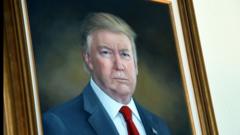
In a recent incident highlighting the intersection of art and politics, former President Donald Trump publicly criticized a portrait of himself that hangs in Colorado’s state legislature, calling it “truly the worst.” The comments came as he was presented with a new painting — a personal gift from Russian President Vladimir Putin — which is yet to be unveiled. Kremlin spokesperson Dmitry Peskov stated that only Putin would disclose further information about the portrait.
Trump expressed his dissatisfaction with the Colorado portrait on his Truth Social platform, perceiving it as a distortion compared to the artwork of his predecessor, Barack Obama. The original piece hangs in the Colorado State Capitol, a space once humorously filled by a prank artist with an image of Putin. Trump, who has a long history of meticulous attention to his own image, had previously revealed a striking official portrait himself, which drew mixed reviews. According to Trump’s envoy, Steve Witkoff, the painting sent by Putin is considered a “beautiful” work by a renowned Russian artist, and Trump felt “touched” by the gesture. This move is emblematic of a budding diplomatic rapport since Trump’s return to office, which coincides with ongoing negotiations addressing the war in Ukraine. Witkoff also recounted a conversation with Putin, who claimed to have prayed for the former president following an assassination attempt last year. Despite Trump’s eagerness to critique the Colorado portrait, art experts suggest that the reactions to presidential portraits are often influenced by the viewer’s political biases rather than the artwork's merit. Robert Anderson, an artist known for his presidential portraits, remarked that perceptions are heavily colored by the public's perception of the individuals depicted. Meanwhile, the Colorado governor's office expressed surprise and appreciation for Trump's attention to the state's artwork, noting the importance of public engagement in the Capitol's artistic representation.