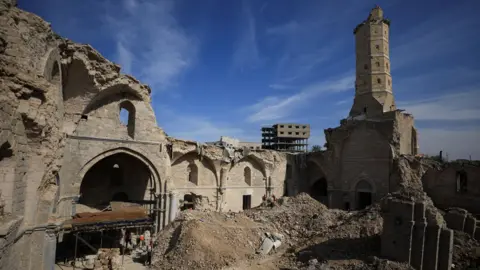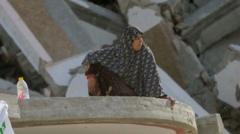
As thousands of displaced Gazans embark on their journey home, the scale of the devastation they face is staggering. After 15 months of conflict, many return to find their homes and communities in ruins. The resilient spirit of the people shines through their determination, yet the obstacles ahead are daunting.
Ghada el-Kurd, a Gazan journalist who sheltered in Deir el-Balah, illustrates the overwhelming challenges: “We have to re-establish again from the beginning, from zero.” The infrastructural collapse has led to a dire humanitarian crisis, characterized by a lack of electricity, water, and basic services.
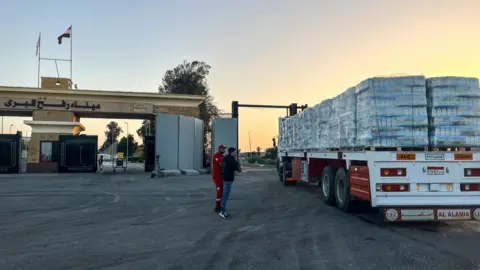
While aid is trickling in, with the UN’s Palestinian refugee agency, Unrwa, reporting an influx of essential supplies like food and hygiene items, it is just the beginning of what is expected to be a long, arduous recovery process. Sam Rose from Unrwa emphasizes the gravity of the situation, stating that meeting fundamental needs is paramount, but the journey ahead is uncertain.
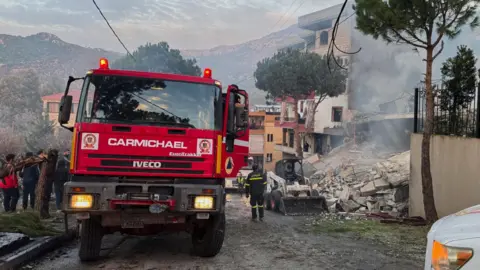
The destruction is particularly severe in northern Gaza, with UN estimates indicating that as much as 70% of buildings have been damaged since October 2023. A staggering number of families are returning to completely obliterated neighborhoods, while others find their homes mostly intact.
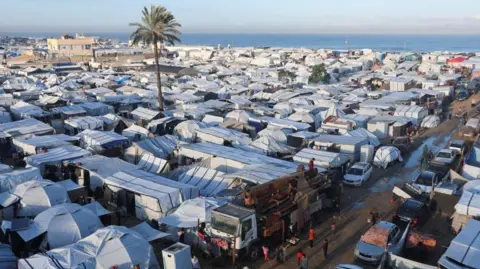
As they navigate this new reality, the demand for temporary accommodations is increasing. The Gazan government has urgently requested 135,000 tents and caravans, and while the UN is attempting to facilitate aid, the immediate availability of manufactured shelters is limited.
Compounding the pressure, individuals still residing in homes vacant for over a year face new challenges as the returning population swells, leading to crowded living conditions and rising tensions among families sharing space. Urban markets are already witnessing price surges due to the influx of residents seeking basic goods.
Despite these hardships, many express a sense of optimism. A resident articulated her relief in returning to the north, a place she hopes will restore her sense of dignity. Yet, the stark reality of devastated infrastructure leaves many with little choice but to confront their precarious circumstances head-on.
The conversation has also turned political, with controversial proposals from foreign leaders suggesting that Egypt or Jordan should absorb displaced Palestinians. Such notions have been met with strong resistance from both nations concerned about the implications of a large influx of refugees.
As the situation unfolds, the risk remains that only those with the means will be able to leave Gaza, seeking refuge in different parts of the Arab world or beyond, leaving the most vulnerable behind. Gazans advocating for a better life within their homeland echo sentiments urging for swift reconstruction efforts and support.
In this fragile moment, many hope that world leaders will prioritize the rebuilding of Gaza, providing inhabitants not just with shelter, but a renewed sense of hope and opportunity for a brighter future.