In brief
Recent actions by militants in Mali, including the setting ablaze of fuel tankers and the imposition of blockades on critical supply routes, signal a dangerous escalation in the region's ongoing insurgency. The Malian government acknowledges the crisis, vowing to enhance security, as local communities face disruption from economic sabotage amid fears of a prolonged siege.
Mali's military government has sought to calm anger over a blockade by Islamist militants on major highways where lorry drivers have been facing ambushes and arson attacks.
In a rare acknowledgement of the seriousness of the situation affecting the landlocked country, Prime Minister Abdoulaye Maïga has said measures are under way to improve security on the routes.
The blockade - a potentially serious escalation of Mali's jihadist insurgency - is particularly affecting the supply of fuel, which could cripple the country.
The Sahel region of West Africa is known as the epicentre of global terrorism, accounting for more than 50% of all terrorism-related deaths.
Several analysts say the aim of the al-Qaeda-linked militants is to impose a blockade of the capital, Bamako.
When did it start?
The blockade appears to have started with the kidnapping and subsequent release of six Senegalese lorry drivers along the Dakar-Bamako corridor in early September. This is not a new tactic by al-Qaeda's Sahel affiliate - Jama'at Nusrat al-Islam wal-Muslimin (JNIM) - but the scale is increasingly ambitious.
They have imposed a blockade on two key locations: the Kayes region - which serves as the gateway for all food supplies entering from Senegal by road and train, and Nioro-du-Sahel - which sits on the main route linking Mali to Mauritania.
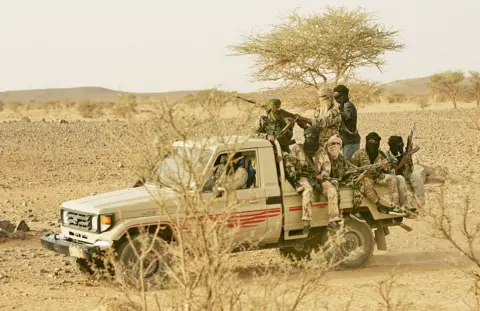
Reports say Islamist fighters have erected checkpoints to restrict the flow of goods and extort taxes from traders. They are said to have torched fuel tankers, lorries and buses, abducted foreign drivers and attacked convoys carrying fuel imports from Senegal and Mauritania.
Entire villages have reportedly been brought to economic standstill, with markets shuttered, transport halted and public services disrupted. Suspected JNIM militants have also ambushed fuel lorries from Ivory Coast in Bougouni, in Mali's southern Sikasso region. Several lorries were torched.
Economic asphyxiation is the militants' goal, Mamadou Bodian of Senegal's Cheikh Anta Diop University told the BBC. He and others point to a strategic shift by the militants, who no longer rely solely on military confrontation to assert territorial control.
Analysts fear that, if successfully implemented, the embargo announced by JNIM on Kayes and Nioro-du-Sahel could paralyse western Mali.
What does the army say?
The Malian army initially downplayed the blockade, with spokesman Col Souleymane Dembélé dismissing reports of a siege as an information war orchestrated by foreign media. Footage circulating on social media of besieged vehicles on the Dakar-Bamako corridor had been taken out of context, he insisted.
According to the army spokesman, no systemic interruption of transport has been observed in western Mali and the real challenge facing people in the Kayes region is the rainy season and not the actions of terrorist groups.
Col Dembélé also characterised JNIM's increased activity as the last gasps of an enemy at bay and in retreat. It is a refrain often used by Malian officials since the junta seized power five years ago.
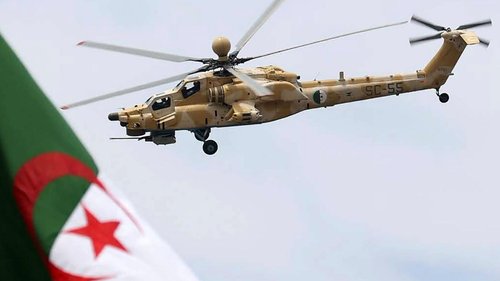
Last week, the army said it had conducted an airstrike on a JNIM camp in Mousafa, in Kayes, killing several dozen militants and destroying a site allegedly used for logistics and planning.
Why is this part of Mali so important?
Kayes is said to account for approximately 80% of the country's gold production, and is also deemed Mali's gateway to Senegal. It is a logistics hub where international trade routes converge. Mali is a landlocked country heavily dependent on neighbouring ports for fuel, food and manufactured goods, so control of Kayes is essential.
The blockade not only disrupts local life, but directly threatens Bamako's economic stability.
The crisis underscores the limits of Mali's reliance on military force, supported by Russian Africa Corps mercenaries, as the Wagner Group is now known, whose role in operations is not officially acknowledged.
By disrupting trade routes from Senegal and Mauritania, JNIM has shown it can project influence westward, raising fears of an expansion into those countries.