Former Procter & Gamble CEO Alan Lafley has drawn parallels between leading a major corporation and managing a Premier League football team, arguing that the importance of a CEO cannot be overstated. With high-profile CEO changes occurring at companies like Boeing, Nike, and Starbucks, it's crucial to examine the role these leaders play in steering their organizations through turbulent times.
Lafley, who helmed Procter & Gamble from 2000 to 2010 and again from 2013 to 2015, recognizes that when a company faces challenges, it is often the CEO who bears the brunt of responsibility. This comparison to a football manager highlights the precariousness of leadership roles; when teams falter, it's the coaches who are usually dismissed rather than the players.
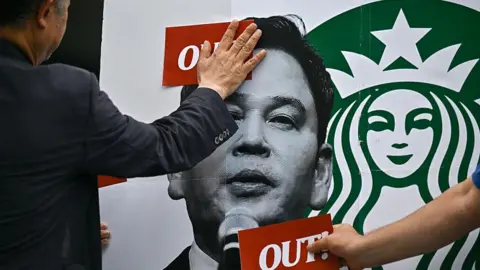
Starbucks, for instance, recently appointed Brian Niccol as its new CEO amid declining sales caused by a complex menu and increased competition. The company’s decision to offer him over $100 million in his first year, along with substantial perks for commuting, underlines the high stakes involved in executive leadership. Investors reacted positively to his appointment, leading to a rise in share prices, reflecting their hope for a turnaround.
According to executive coach Alisa Cohn, the primary responsibility of a CEO is to set the strategic direction and culture of a company. This role is particularly complex, as it requires a leader to orchestrate collaborative efforts among teams to optimize resources effectively. Marcia Kilgore, a seasoned entrepreneur, notes that a successful CEO must have the skills to organize various initiatives and foster teamwork, ensuring both productivity and company growth.
The significance of communication also figures prominently in effective leadership. Lafley reflects on his tenure at P&G, where he emphasized rebuilding employee trust and focus on customer service in the wake of his predecessor's ousting. He recalls the importance of face-to-face meetings in those pre-remote work days to reassure and inspire his vast workforce.
As new CEOs like Elliott Hill at Nike step into the role, they face the challenge of reviving a company’s fortunes in the face of past declines. Hill’s initial communications to staff highlighted his confidence in their capabilities, as Cohn asserts that self-assuredness and adaptability are critical attributes for any successful CEO.
However, the compensation packages for top executives have drawn criticism, particularly regarding the balance between their salaries and that of the average worker. In 2022, the average CEO salary in the S&P 500 soared to $16.3 million, drawing concerns from watchdog groups like the Institute for Policy Studies, which argues that this gap undermines the health of the economy and democracy at large.
Lafley himself acknowledges that the disparity in pay is excessive but believes it stems from a competitive market for top talent. To address this issue, he suggests a framework where CEOs receive modest base salaries complemented by performance-based incentives to foster accountability and performance.
In conclusion, leading a major corporation is akin to coaching a sports team; the CEO must motivate and enable employees to thrive in a complex competitive landscape. As companies navigate their futures, the effectiveness of their leaders will play a pivotal role in achieving success.