In brief
As Israel's air strikes deepen, the toll on civilians in Lebanon escalates daily. This article highlights the harrowing experiences of rescue workers and families affected by the ongoing conflict, conveying the resilience of those working to save lives amid chaos.
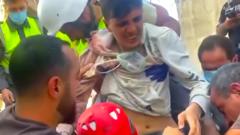
In the Bekaa Valley, the Russian roulette of life and death unfolds as ambulances rush to the scenes of devastation following relentless Israeli air strikes. Samir El Chekieh, a 32-year-old firefighter and paramedic with the Lebanese Civil Defense Force (CDF), struggles through exhaustion and anguish as he responds to calls that often involve mass casualties amidst an unpredictable war between Israel and Hezbollah. The atmosphere starkly contrasts that of previous conflicts; this time, the strikes penetrate deep into the heart of Lebanon, targeting not just military assets but civilian infrastructures as well. Areas like El Karak and Baalbek, historically significant and predominantly Shia, face unprecedented levels of devastation. According to the Lebanese government, casualties include an increasing number of women and children, highlighting the grim reality of the ongoing hostilities.As Samir navigates through the rubble of a destroyed apartment block, he recalls the harrowing task of finding survivors amidst the destruction, including a tragic encounter with half a child’s body before eventually rescuing a ten-year-old girl and her eight-month-old brother, who had been trapped underneath the debris. Despite the horrifying scenes, Samir remains resolute in his commitment to humanitarianism, stating, “We don’t ask the sex of the victim. We don’t ask if he's black, white. We are humanitarians.”With every passing day, in October alone, an estimated one child was killed, and ten were wounded on average in the escalating violence, forcing tens of thousands to flee their homes as cities like Baalbek experience what the UN describes as “the largest forced movement Lebanon has seen in a single day.” Families displaced and desperate struggle to hold on to their homes and their lives despite overwhelming fear and loss.The toll of this unyielding conflict shatters families and communities, exemplified by Jawad Hamzeh, who lost three daughters in an air strike that left him holding their school books amidst the rubble that once was his home. Public sentiment oscillates between a fervent desire for safety and an unwavering sense of place as individuals like Hussein Nassereldine refuse to abandon their roots.Caught in the crossfire, small hospitals struggle under the weight of the injured. Children like three-year-old Selin, who lost her family in an air strike, symbolize the devastating impact of war on the youngest and most vulnerable. As healthcare providers attend to these victims, defiant voices like that of Najat, a mother cradling her injured son, echo a sentiment of resilience—the belief that their identity and traditions encompass greater strength than the forces attempting to steamroll them.As dawn breaks over the villages, the dedicated emergency service workers like Samir brace themselves for another day. Traumatized by endless images of destruction, they draw strength from their faith, pledging to continue their noble quest of saving lives. “When you manage to keep one [person] alive, that will give you the strength to keep going,” he reflects. In these times of despair, Lebanon’s heart beats within the courageous souls of those who labor tirelessly for a glimmer of hope amidst chaos.