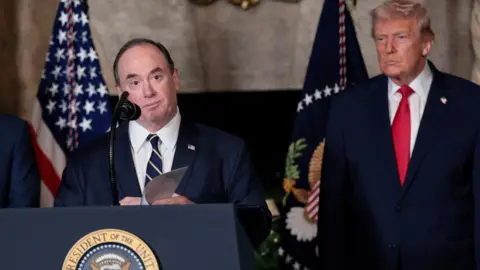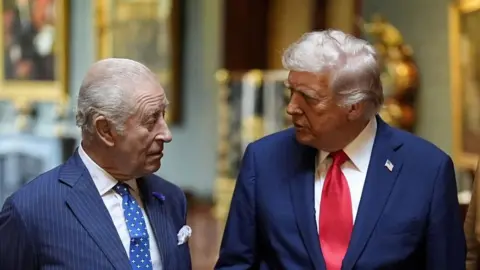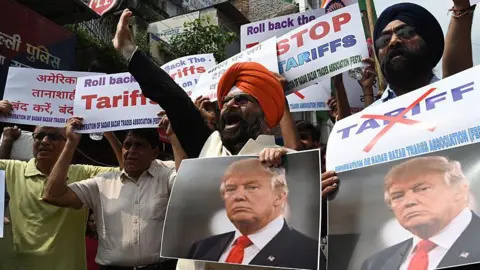
The 50% tariffs enacted by US President Donald Trump on August 27 have sent shockwaves through the Indian economy. Rather than retaliating immediately, India has opted for a strategic response aiming to strengthen geopolitical relationships, evidenced by Prime Minister Narendra Modi's engagement with leaders from China and Russia.
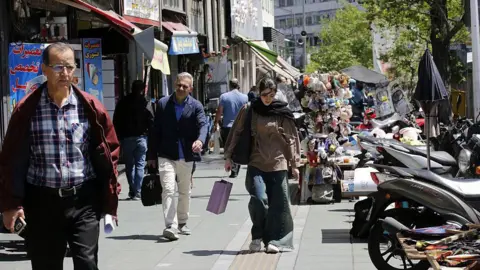
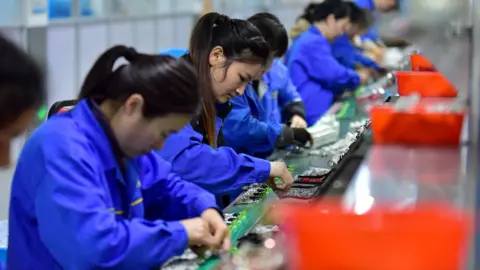
Domestically, Modi has introduced measures to support exporters affected by the tariffs, such as tax reductions aimed at easing the burden on export sectors. However, the prolonged nature of this tariff dispute poses a significant threat to India's economy, potentially leading to an estimated $35 billion drop in exports and endangering numerous jobs in key industries.
Experts warn that escalating the trade conflict through retaliation would likely be detrimental, considering India's dependency on the US market, where goods exports to the US are nearly three times those from the US to India. Hence, voices advocating for patience and strategic market diversification suggest strengthening ties with countries such as Mexico, Canada, and members of the European Union.
Previous retaliatory efforts have demonstrated the high stakes involved; tariffs between nations can reach unprecedented levels, impacting both economies. Observers urge India to adapt by diversifying its export destinations and reinforcing its domestic industries to withstand external shocks.
The potential of future tariffs extending to sensitive sectors such as services and outsourcing raises the stakes further, making it critical for India to pursue proactive measures while maintaining a measured stance towards the ongoing US tariff situation.
In conclusion, while India's immediate steps may focus on diplomacy and market diversification, ensuring domestic economic resilience through technology and competitive upgrades remains paramount to safeguard its export standing amidst uncertain international trade dynamics.