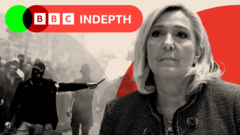
In a dramatic turn of events, the recent ruling that has barred Marine Le Pen from participating in the 2027 presidential elections has stirred deep indignation among France’s far-right factions. Le Pen, the leader of the National Rally (RN), is viewed as a central figure in the party’s ambitions to secure power, and her conviction for financial misconduct has ignited a firestorm of outrage, with allies vehemently defending her.
The political landscape has become charged, with discussions resonating on all media platforms. A spokesperson for Le Pen’s party urged supporters to express their outrage, a tactic intended to galvanize her political base in the aftermath of the ruling. Yet, amid the frenzy, it remains to be seen whether this situation will solidify support for the RN or fracture the already divided far-right.
Le Pen and her confidants have accused the French judicial system of encroaching on democracy, claiming that the verdict represents a grave assault on the public’s right to elect their leaders. During a notable press conference, she likened her circumstances to those of the late Russian dissident Alexei Navalny, suggesting that the severity of the legal action reflects her potential to disrupt the political order in France.
The ramifications of this case are complex. While Prime Minister François Bayrou expressed concerns about the political implications of Le Pen’s conviction, the broader political spectrum is grappling with how to maintain democratic integrity while responding to far-right populism. A recent poll indicated that nearly one-third of the French population viewed the court's decision against Le Pen as just, revealing a nuanced public perception of her candidacy.
It's worth acknowledging the detailed evidence against Le Pen, which included substantial documentation of financial malfeasance. The verdict included a five-year prohibition from public office, issued in the wake of a prolonged legal process that many believe could have softened if Le Pen had cooperated. The judges articulated concerns regarding her lack of accountability, making it clear that misconduct, regardless of intent, would not go unpunished.
The political elite's reaction has been rife with contradiction, as many leaders who once championed stringent corruption laws now display sympathy for Le Pen’s predicament. This echoes sentiments from nearly a decade ago when stricter anti-corruption laws were enacted, designed in part to prevent the very issues Le Pen now faces.
Looking forward, the National Rally stands at a crossroads. Le Pen's immediate future hinges on a potential appeal against her sentence, while speculation surrounding who might ultimately succeed her if she remains sidelined is mounting. Young RN leader Jordan Bardella is emerging as a strong contender, known for engaging with France’s youth and spearheading a modern image for the party.
Despite efforts to detoxify the party's reputation, the RN remains entrenched in a populist narrative that frames its ongoing struggles as a clash against a corrupt political class. Bardella’s recent remarks regarding media censorship and judicial overreach resonate with the RN faithful but may not translate effectively to wider voter appeal.
In conclusion, the fallout from Le Pen's disqualification introduces an era of uncertainty for France's political dynamics. With presidential elections are still two years away, new emerging leaders and shifting public attitudes could dramatically alter the outcome in 2027. Whether Le Pen emerges as a martyr of the system, a repeat presidential failure, or a figure of enduring influence remains to be seen, as the stage is set for a politically charged future in France.