In brief
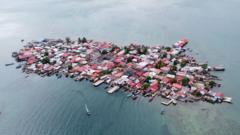
A small Indigenous community, the Guna, from the island of Gardi Sugdub in Panama, has begun a new chapter after relocating due to rising sea levels. Scientists warn that by 2050, the island is expected to be uninhabitable as climate change alters the landscape. The majority of the 1,000 residents have settled in the newly constructed community of Isberyala, while around 100 have chosen to remain, highlighting the divide in how individuals view climate threats.
Though some find opportunity in the new settlement – which offers better infrastructure and the potential for healthier living conditions – concerns about cultural preservation linger. Tradition and identity are crucial to the Guna people, many of whom mourn the loss of their original homes and ways of life. Despite improved living conditions, community leaders emphasize that their cultural essence remains strong while they adapt to new realities. As they navigate their new lives, the Guna aim to retain their rich cultural heritage through music, art, and community gatherings. Observers highlight the need for global action, learning from displaced communities like the Guna to address the impacts of climate change effectively.---**Article Text:**"If the island sinks, I will sink with it," says Delfino Davies, smiling as he sweeps the floor of the small museum he maintains to document the life of his community, the Guna, in Panama. Gardi Sugdub, the tiny, low-lying island he calls home, has faced "imminent risk" of becoming uninhabitable due to rising sea levels, with scientists predicting this could happen by 2050.As most residents left last June, abandoning their wooden and tin homes, Delfino noted the profound silence where laughter and music once thrived. With around 1,000 members relocated to the mainland, only about 100 people remain on Gardi Sugdub. For Delfino and others, the decision to stay was fraught with cultural importance, tied deeply to their ties to the ocean and their traditions. "The people that lose their tradition lose their soul," he reflects.The Guna people have inhabited Gardi Sugdub since the 19th Century, having fled from the mainland to evade conquistadors and conflicts. They are known for their vibrant molas, a form of textile art that symbolizes their unique heritage. Steve Paton from the Smithsonian Tropical Research Institute suggests that the complete submersion of most of the islands in the archipelago is highly probable due to climate change-related sea level increases.Gardi Sugdub, measuring just 400m by 150m, faced overcrowded living conditions long before climate considerations were raised over a decade ago. Magdalena Martínez, a resident, recalls how the increasing tides impeded their ability to cook and frequent flooding prompted relocation. But the journey wasn’t without emotional baggage. "You feel like you are leaving pieces of your life on the island," she says.In Isberyala, the new settlement, the residents find structurally uniform homes on paved streets, a stark contrast to their former dwellings. Despite the emotional weight of relocation, some are optimistic. Magdalena expresses joy at having space to garden and a consistent power supply, even though there remain challenges, such as limited access to water and health care, prompting the community to keep up with plans for essential services.Tito López, the community leader, assures that while infrastructure changes, the essence of the Guna identity remains. He cites cultural practices such as communal gatherings in traditional spaces, which help to maintain their heritage.The new school upholds Guna customs, teaching children traditional music and dance, critical for passing on cultural values even in a new environment. While some appreciate the modern conveniences of Isberyala, others, like Yanisela Vallarino, often return to Gardi Sugdub, still torn about leaving their roots.Erica Bower, a researcher from Human Rights Watch, notes that lessons learned from the Guna’s relocation could serve as a blueprint for other communities facing similar fates. As children play in the new settlement, the efforts to preserve Guna culture continue amid a backdrop of climate urgency. "I wish we were all here," Magdalena admits wistfully, highlighting the bittersweet nature of their transition. Communities worldwide must heed similar calls for resilience as climate change threatens lives and traditions, underscoring a critical need for dialogue and action in response to an impending crisis.