In brief
The southeastern US is reeling from severe flooding that has claimed at least nine lives over the weekend, as state officials warn of ongoing risks and call for emergency support amidst catastrophic damage.
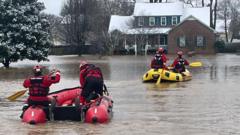
At least nine individuals have tragically lost their lives this past weekend due to severe flooding and torrential downpours that have struck the southeastern United States. Kentucky has been particularly hard-hit, with Governor Andy Beshear announcing that eight fatalities have been confirmed in his state, and he has indicated that the number may unfortunately rise. Compounding the crisis, hundreds of residents have found themselves stranded in floodwaters, prompting numerous rescue operations as officials urge citizens to remain off the roads for their safety.The ninth fatality occurred in Georgia, where a man was killed by an uprooted tree that fell on his home as he slept. Weather alerts were issued across multiple states, including Kentucky, Alabama, Georgia, and Virginia, as many of these areas had only recently recovered from the destruction caused by Hurricane Helene in September. According to poweroutage.us, over 500,000 households were left without electricity by Sunday evening as a direct result of the severe weather.In Kentucky, where rainfall reached up to six inches in some areas, the National Weather Service reported alarming rise in river levels, which led to more than 300 road closures and significant flooding. Governor Beshear has reached out to the White House for an emergency disaster declaration, which was subsequently approved by President Trump. This authorization will allow the Federal Emergency Management Agency (FEMA) to coordinate relief efforts, despite the president's previous statements suggesting the potential abolishment of the agency.Local emergency officials have cautioned that the flooding situation remains precarious, indicating that rivers may continue to rise. In Tennessee's Obion County, a levee breach has accelerated flooding, compounding the risk for those living nearby. Evacuations have been mandated in the town of Rives, where residents face deadly threats from the rising waters as well as power outages and freezing temperatures.In West Virginia, Governor Patrick Morrisey declared a state of emergency across multiple counties as emergency services ramp up efforts to support impacted communities. Meanwhile, Kristi Noem, the head of the Department of Homeland Security, pledged federal assistance efforts are on standby, ready to help the states respond to this crisis.As meteorologists eye a polar vortex moving toward the northern Rocky Mountains, further severe weather could affect a wider region, highlighting the urgent need for improved disaster preparedness and climate resiliency across the country. Amidst these challenges, communities in the southeastern US are left grappling with the immediate effects of flooding and the long-term implications of climate change.