In brief
As Delhi battles hazardous smog levels, authorities impose strict measures and residents demand action against pollution.
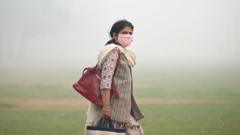
Air pollution in Delhi, India, has reached alarming levels, prompting officials to classify the air quality as "severe plus," with readings soaring to 1,500 on the Air Quality Index (AQI) according to tech firm IQAir. This level of pollution is 15 times higher than the safe limit set by the World Health Organization (WHO). The thick smog blanketing the city has severely impacted daily life, disrupting flight services, closing schools, and halting construction work.In the past few weeks, neighboring Pakistan's city of Lahore also experienced alarming pollution levels exceeding 1,000 AQI. Experts indicate the air quality may worsen in the coming days, necessitating further drastic measures. The WHO classifies air with AQI above 300 as potentially hazardous to health, while India's pollution control authority has designated Delhi's air as "severe plus" after it surpassed 450.Authorities in Delhi have responded with a series of emergency measures. Schools are closed, construction is banned, the entry of non-essential trucks into the city has been halted, and offices have been instructed to have at least 50% of their workforce operating remotely. Last week, the government also prohibited the use of coal, firewood, and diesel generators for non-emergency activities.Every year, as winter descends on northern India, a perfect storm of factors—falling temperatures, vehicular emissions, stubble burning, dust, and low wind speeds—culminates in notoriously poor air quality from October to January. Despite previous pollution control strategies, Delhi remains ensnared in a cycle of hazardous pollution.Delhi's Chief Minister Atishi has labeled the high pollution levels as a "medical emergency," attributing the worsening situation to unregulated stubble burning in Haryana, Uttar Pradesh, and Bihar. The ruling Bharatiya Janata Party (BJP) faced criticism for not adequately addressing this problem, countering that the Aam Aadmi Party (AAP) should bear responsibility for the city’s ongoing pollution challenges.Residents express growing frustration, with many citing health issues such as sore throats and the ineffectiveness of air purifiers in the home environment. One user took to social media to advocate for peaceful protests, emphasizing the dire need for urgent action against the toxic air enveloping the city, which they described as akin to inhaling poison. As Delhi grapples with this environmental crisis, the call for accountability and lasting solutions grows louder, reflecting a mounting urgency among citizens for cleaner air and a more sustainable urban environment.