In brief
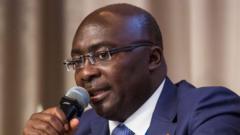
Mahamudu Bawumia, Ghana's current vice-president and digital innovation advocate, is the candidate for the ruling New Patriotic Party in the upcoming elections. Despite criticism for the country’s economic struggles, he aims to leverage his technology-driven agenda to secure victory and define a new era for Ghana.
Mahamudu Bawumia, currently serving as Ghana's vice-president, is positioning himself for a groundbreaking presidential run this December. His candidacy under the New Patriotic Party (NPP) could lead to him becoming the first Muslim president in the nation’s history. Bawumia, a notable Tottenham Hotspur fan, is known for his intellectual prowess, having been educated at Oxford University. His dedication to digital transformation has earned him the title "Mr. Digital" as he seeks to propel Ghana into a technological forefront. However, Bawumia’s leadership of the government's economic management team has left many Ghanaians linking him to the country’s current cost of living crisis. Critics argue that his political ascension rides on his past economic genius, which now contrasts sharply with Ghana's inflation rate peaking at 54% in December 2022. If he manages to secure a win, he would succeed current President Nana Akufo-Addo, who has reached the end of his two-term limit.Bawumia's political journey began in 2008 when he was nominated as a running mate to Akufo-Addo, despite being a relative outsider with no previous public office experience. Initially met with skepticism by many, he revealed stunning charisma during election campaigns, especially noted during a Supreme Court challenge in 2012 where he testified against alleged election rigging. His presence on the NPP ticket became vital, culminating in a victory in 2016 where he was sworn in as vice-president.Born in 1963 into a large family in Tamale, Bawumia's background is rich in political history. Following his secondary education in Ghana, he pursued higher education in the UK, juggling various jobs to support his studies. His career began at the central bank of Ghana, where he rose to the position of deputy governor. Coming to power amidst an economic crisis, Bawumia has faced substantial scrutiny for high inflation and government debt, which has led to seeking a $3 billion loan from the International Monetary Fund.While he defends his government’s economic actions, pointing out that his team did not directly make decisions, many citizens express disappointment over unmet expectations. Advocating for a digital economy, Bawumia's efforts have garnered praise from entities like the United Nations for advancing Ghana’s digital infrastructure, particularly in health care through partnerships that utilized drone technology for vaccine deliveries.Bawumia's digital initiatives have stirred divided opinions. While supporters commend his achievements, skeptics claim that substantial digital advancements were inevitable and have been ongoing efforts separate from his influence. Critics such as political commentator Franklin Cudjoe suggest Bawumia focuses too much on digital narratives rather than addressing pressing economic issues.On the personal front, Bawumia is known for his supportive family life. He has been married for over two decades to Samira Bawumia, a respected figure actively involved in NPP campaigning, showcasing a modern family image aligned with Islamic values—a minority in a predominantly Christian nation.As Bawumia embarks on an ambitious campaign across the country in an effort to resonate with diverse demographics, he faces the complex challenge of leveraging his digital agenda while countering mounting economic criticism. He remains optimistic, continuing to advocate for a vision of possibility and resilience for Ghana's future.