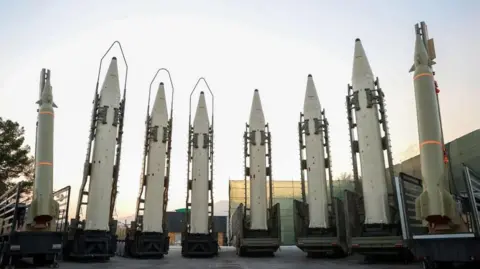
North Korea has fired what appears to be an intermediate-range ballistic missile towards its eastern sea, marking the country's first missile launch in two months. South Korea's military reported that the missile traveled 1,100 km before falling into the ocean, condemning the action as a "clear act of provocation." This launch coincides with the visit of US Secretary of State Antony Blinken to Seoul, where he engages in crucial discussions with South Korean leaders.
During a meeting with acting president Choi Sang-mok, Blinken reaffirmed the strategic alliance between Washington and Seoul as a "cornerstone of peace and stability on the Korean Peninsula." In response to the missile launch, South Korea's military has ramped up surveillance for potential future activities from the North and is coordinating closely with the United States and Japan.
The missile test comes at a time of significant political upheaval in South Korea, where the mitigation of power struggles and impeachment procedures against suspended President Yoon Suk Yeol has generated unrest. Yoon’s recent attempt to declare martial law was widely criticized, and the political drama has drawn sharp rebukes, including from North Korea, which labeled Yoon's maneuvers as an “insane act” while characterizing its own governance under Kim Jong Un as a benevolent rule.
Prior to this latest missile launch, North Korea had last conducted missile tests in November, coinciding with the US presidential elections. The regime's military activity has often followed displays of allied military might, such as the recent trilateral exercises involving the US, South Korea, and Japan, prompting retaliatory threats from Kim Jong Un's sister, Kim Yo Jong.
The situation highlights ongoing tensions in the region, as North Korea continues to advance its missile capabilities amidst a backdrop of political instability and condemnation from the international community over its dictatorial governance.