In brief
North Korea has enforced a sudden stop to tourism, signaling ongoing uncertainty in its reopening efforts following a long lockdown during the Covid-19 pandemic.
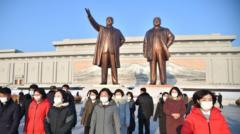
North Korea has once again closed its doors to tourists, less than a month after allowing Western visitors into the country for the first time in five years. The closure follows a nearly three-year self-isolation period that began in early 2020 with the onset of the Covid-19 pandemic. The country had resumed limited accessibility in mid-2023, first welcoming Russian tourists in early 2024 and subsequently opening its border to Westerners in February.Several tour companies, including the China-based KTG Tours, Young Pioneer Tours, and Koryo Tours, have confirmed the suspension of trips, advising potential travelers to refrain from making reservations until further notice. KTG Tours conveyed the sudden news of Rason, the designated port city for Western tourists, being closed via a social media post, indicating a reversal in travel plans that had recently been finalized.The initial reintroduction of tourism was viewed as a trial regime and featured significant restrictions on tourists' movements. Compared to pre-pandemic tours, visitors had limited opportunities for interaction with local residents and were deprived of mobile phone signals or internet access, indicating stringent control measures. This raises questions about the rationale behind Rason's selection as a trial zone, as its relatively small and contained environment might have made it easier to monitor tourists.Before this recent suspension, Koryo Tours had announced that it was accepting participants for the Pyongyang Marathon on April 6, marking the first time in five years that international applications were being processed. However, the sudden cessation of tourism raises doubts over whether such events will be able to proceed as planned.In 2019, prior to the pandemic, North Korea welcomed approximately 350,000 foreign tourists, the majority being from China. As the situation develops, the path to reopening remains ambiguous, casting uncertainty over future tourism in the Hermit Kingdom.