In brief
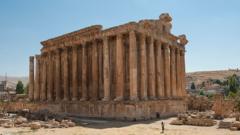
As Israeli air strikes intensify in Lebanon, the safety of the ancient Roman ruins at Baalbek is in jeopardy. Archaeologists warn that ongoing military actions could lead to catastrophic damage to these invaluable historical sites, urging immediate awareness and protective measures.
As the conflict between Israel and Hezbollah escalates, the exquisite Roman temples at Baalbek in eastern Lebanon face increasing threats from nearby military activities. A recent airstrike by Israel struck a car park just meters from this UNESCO World Heritage site, drawing attention to the potential for irreparable damage to historical sites in a region already burdened by conflict. Graham Philip, an archaeology professor at Durham University, emphasized the significance of Baalbek, stating, "You couldn't replace it if someone bombed it. It would be a huge loss. It would be a crime."Since late September, Israel has intensified its military campaign against Hezbollah, leading to thousands of air strikes predominantly targeting locations in southern Lebanon, the capital city of Beirut, and the Bekaa Valley. However, the recent expansion of military operations has brought the conflict perilously close to ancient sites, with the Israel Defense Forces (IDF) insisting that their strikes are targeted solely at military installations. In a statement to the BBC, they claimed, “Each strike that poses a risk to a sensitive structure is weighed carefully.” Still, local archaeologists and citizens express grave concern over the proximity of military actions to heritage sites like Baalbek and Tyre, the latter being the legendary birthplace of ancient royal purple dye.Ongoing bombings raise the fear of collateral damage, as evacuation orders near these ruin-laden neighborhoods were issued just hours before the IDF conducted strikes. Reports of plumes of black smoke billowing from locations only a short distance from the Roman ruins have alarmed many, including local archaeologist Joanne Farchakh Bajjaly, who believes the temples are at risk due to their location within targeted areas and asserts no military facilities exist there.As ordinary Lebanese citizens find refuge among the ancient stones, mistakenly believing they are sheltered from the conflict, concerns about their safety grow. Bajjaly has warned against using these cultural sites as safe havens, highlighting the urgency for protective measures. Israeli archaeologist Erez Ben-Yosef acknowledged the delicate balancing act faced by his country and stated that preventing damage to invaluable archaeological sites is a priority for military planners. The legacy of these sites transcends national borders; they represent cultural heritage crucial not only to Lebanon but to the world. The ongoing war jeopardizes both the tangible and intangible history embodied within these ruins. Graham Philip reflects on the broader implications, stating, "Imagine how people would feel in Britain if the Tower of London or Stonehenge were destroyed. It's part of their identity."As international tensions rise and military strategies evolve, the fate of Baalbek and similar ancient treasures remains uncertain, marking a poignant chapter in the ongoing narrative of warfare and cultural preservation.