In brief
Justice Chandrachud, India's 50th chief justice, reflects on his legacy amidst contrasting opinions from critics and supporters regarding his tenure marked by significant judicial decisions and perceived government alignment.
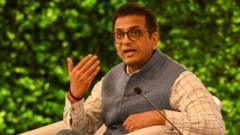
Justice Dhananjay Yashwant Chandrachud, who recently stepped down as India’s 50th chief justice, leaves behind a legacy marked by both significant achievements and contentious critiques. His tenure has sparked a broader debate on the role of the judiciary in an increasingly polarized Indian political landscape.In his final reflections, Justice Chandrachud expressed an introspective concern for how history will assess his judicial contributions, pondering whether he met the aspirations of the citizens and the weight of responsibility on his shoulders. During his more than eight-year service on the Supreme Court and particularly as chief justice for the last two years, he oversaw a court tasked with interpreting laws for a nation of 1.4 billion people. Often celebrated as India’s first "celebrity judge," Justice Chandrachud made headlines not just for his judgements but also for his public persona, taking part in various cultural conversations that resonated with the citizenry. He was lauded for writing an impressive 93 judgments that addressed pivotal topics, including LGBTQ+ rights and freedom of religion. His landmark decisions, such as decriminalizing homosexuality and allowing women into Kerala's Sabarimala temple, positioned him as a progressive figure within a judiciary often viewed through a more conservative lens.However, his tenure has not been without criticism. Some observers label him a “pushover,” claiming he often faltered in holding the government accountable, particularly in politically sensitive matters. Prominent voices, such as senior lawyer Kamini Jaiswal, voiced disappointment in his inability to leverage his legal acumen against the state’s power, suggesting that his decisions sometimes favored the ruling party. Additionally, critics have pointed to Justice Chandrachud's controversial interactions with political figures, suggesting they might compromise the independence of the judiciary. A viral moment of him worshipping alongside Prime Minister Modi raised questions about judicial impartiality, with many concluding that such appearances can undermine public trust in the legal system. Chandrachud defended his position, stating the importance of maintaining an open dialogue between branches of government while underscoring that the merit of his legacy will ultimately reside in his judicial writings. His insistence on the need for accountability and fairness was echoed throughout his judicial body of work, which included calls for reform within the legal system against unwarranted incarcerations.Despite the mixed reception, as Justice Chandrachud exits the highest court, he remains optimistic about his contributions, asserting that he has left the judiciary in a better position than when he entered. With his retirement, the debate over his legacy will likely persist, as citizens and legal analysts examine the impacts of his tenure in an evolving judicial and political landscape.