In brief
The recent summit at Lancaster House showcased European leaders' commitment to support Ukraine amidst ongoing tensions, yet the true impact on U.S. policy remains uncertain, leading to questions about the future of transatlantic relations.
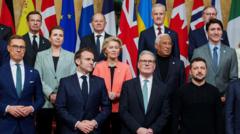
In a remarkable show of solidarity, leaders from across Europe convened at Lancaster House in London to assess and strategize support for Ukraine amidst its ongoing conflict with Russia. While the sun shone over the historic venue, a pervasive sense of doubt lingered regarding the summit's potential to effect meaningful changes in the diplomatic landscape. Prime Minister Keir Starmer asserted that Europe has a critical role to play in the quest for a ceasefire, signaling that the UK, France, and other allies would collaborate on a plan to halt hostilities in Ukraine before presenting it to U.S. officials. Starmer committed to ensuring that military assistance to Ukraine would continue, emphasizing plans to enhance Ukraine's defense capabilities. This aligns with the goal of developing a "coalition of the willing" to safeguard Ukraine’s sovereignty and security, though the specifics concerning its formation remain murky.European leaders, including European Commission President Ursula von der Leyen, outlined a vision to fortify Ukraine with robust defenses against any potential aggression, likening the nation to a “steel porcupine” that would deter invaders. However, the effort to garner a military backstop from the U.S. appears to be a prominent hurdle, especially as Trump has expressed reservations about deeper military involvement in Ukraine. The summit represented a pivotal moment for Europe to reclaim diplomatic agency following a series of high-stakes discussions primarily led by the United States. The historical context of strained transatlantic relations, exemplified by recent confrontations between Trump and Ukrainian President Volodymyr Zelensky, heightened the urgency for a cohesive European strategy.Despite the expressed resolve among European leaders, a significant point of contention remains the U.S. stance on Ukraine’s future. Recent mixed signals from U.S. officials regarding engagement with Ukraine have raised further questions regarding how allied cooperation will unfold moving forward. The Lancaster House summit portrayed a united European effort in support of Zelensky but left lingering uncertainties about U.S. involvement and its implications for the broader geopolitical landscape.