In brief
Hungarian Prime Minister Viktor Orban met with Russian President Vladimir Putin in Moscow, further solidifying Hungary's role as one of Russia's closest allies in Europe. Orban's visit highlights ongoing tensions within the EU regarding responses to the Russian invasion of Ukraine. Amid talks of a potential Russia-US summit, Orban's government is navigating the delicate balance of securing energy supplies while facing political challenges at home. His ongoing diplomacy raises questions about Hungary's alignment with EU sanctions and future relations with both Russia and the United States.
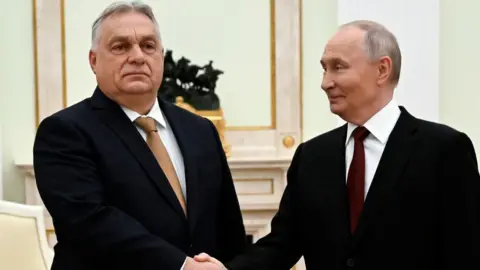
Hungarian Prime Minister Viktor Orban has met President Vladimir Putin in Moscow, just days before Russia is set to hold talks regarding a U.S. initiative aimed at ending the war in Ukraine. This meeting comes as Orban continues to position himself as one of Putin's closest allies in Europe, consistently defying NATO and EU solidarity against Russia.
During the meeting, Putin remarked, We are aware of your balanced position on the situation in Ukraine, according to Russian state TV reports. He also appreciated Orban for suggesting Budapest as a potential location for a summit with President Trump.
Trump immediately said: 'We have good relations with Hungary, you have good relations with Viktor, and I do too, so I suggest this option.' Of course, we happily agreed, Putin added.
Although a Budapest summit was initially proposed last month, it was postponed as Russia appeared unwilling to compromise on its demands regarding the war. With Hungary facing parliamentary elections in April, this meeting could provide political leverage for Orban, as he seeks to secure re-election amidst growing challenges.
Orban's recent visit to Moscow follows his July 2024 trip and emphasizes his continuous soliciting of Russian energy supplies, crucial for Hungary's winter energy needs. Simultaneously, he has challenged EU efforts to cut off Russian gas and oil imports, offering an exemption from U.S. sanctions as long as he remains in power.
Since the onset of Russia's full-scale invasion of Ukraine in 2022, Orban has portrayed Hungary as a nation pursuing peace, directly opposing EU leaders whom he labels as war-mongers. In a letter to EU Commission President Ursula von der Leyen, he insisted on immediate peace talks and rejected further EU support to Ukraine.
As Hungary is under pressure to end Russian energy imports by 2027, Orban's reliance on Russian resources raises tensions with the EU. His strategy aims to navigate impending consequences of broader geopolitical shifts while ensuring energy security for his nation.
In the backdrop of this increasing complexity, Orban's delicate balancing act between the U.S. and Russian interests may define Hungary's future relations both regionally and internationally.