In brief
In a controversial ruling, the South Korean government has asserted that K-pop celebrities, including popular girl group NewJeans, do not qualify as workers under labor law, despite allegations of workplace harassment and exploitation. This revelation has triggered public outcry and discussions on the urgent need for reform in the entertainment sector.
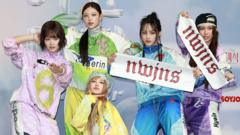
The South Korean girl group NewJeans has captured global attention, boasting immense popularity and record-breaking album sales. However, a recent ruling from the country’s Ministry of Employment and Labor has classified these celebrities as independent contractors rather than workers, negating claims of workplace harassment made by the group. This decision has ignited a wave of backlash against the government, highlighting ongoing issues in an industry notorious for its grueling conditions and high-performance expectations.NewJeans, formed by record label Ador in 2022, includes members aged 16 to 20, and was recently embroiled in controversy after vocalist Hanni raised concerns about their treatment during a livestream on September 11. In the now-deleted video, she alleged workplace harassment and spoke of a culture of neglect within their management company, Hybe. Hanni’s testimony, which accused senior executives of distancing themselves from the group, led to a petition from fans demanding government action on their behalf.Despite these serious allegations, the Ministry of Employment and Labor stated that Hanni and her bandmates do not fit the criteria of workers as outlined in the Labor Standards Act. According to legal experts, celebrities' contracts often lack fixed working hours and direct supervision, thus disqualifying them from worker status and the associated rights. Hanni’s income, categorized as "profit sharing" rather than wages, further complicates her standing under labor laws.Critics argue that this ruling perpetuates a system that allows for the exploitation of K-pop idols, who regularly endure intensely long hours, often without designated rest periods. CedarBough Saeji, a professor of Korean and East Asian studies, emphasized the hazardous working conditions that celebrities face, pointing out that their non-employee status removes them from the protections that regular workers enjoy.Calls for reform have gained momentum, with fans rallying under the hashtag “IdolsAreWorkers” in a show of solidarity for NewJeans. Advocates are pushing for legislative changes akin to Hollywood’s Talent Agency Act, which would protect artists from exploitation and mandate fair contracts.Hybe remains a dominant force in the industry, representing prestigious names like BTS. Yet, the K-pop landscape continues to be fraught with pressures and demands that many argue necessitate immediate attention and reform to safeguard the rights and welfare of its stars. As the debate intensifies, the future of South Korea’s entertainment industry hangs in the balance, with advocates calling for a new approach to the treatment of its musical icons.