A flight carrying British aid arrived in Jamaica early on Saturday to help with recovery efforts after Hurricane Melissa, as the UK plans its first chartered flight to bring British nationals home later on Saturday.
The aid flight brought more than 3,000 emergency shelter kits as part of a £7.5m regional emergency package.
Part of the funding will be used to match public donations up to £1m to the International Red Cross and Red Crescent - with King Charles and Queen Camilla among those who have donated.
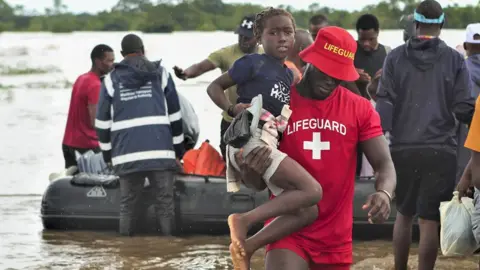
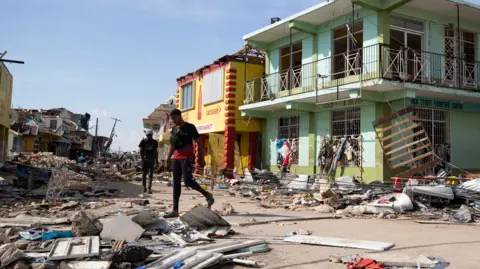
Despite aid arriving in Jamaica in recent days, fallen trees and landslides have complicated distribution after Hurricane Melissa devastated parts of the island, killing at least 19 people.
The hurricane made landfall in Jamaica on Tuesday as a category five storm and was one of the most powerful hurricanes ever measured in the Caribbean.
Melissa swept across the region over a number of days and left behind a trail of destruction and dozens of people dead. In Haiti, at least 30 people were killed, while Cuba also saw flooding and landslides.
Jamaica's Information Minister Dana Morris Dixon stated on Friday that there are entire communities that seem to be marooned and areas that seem to be flattened.
The UK initially set aside a £2.5 million immediate financial support package, with an additional £5 million announced by Foreign Secretary Yvette Cooper on Friday.
Cooper emphasized that this announcement comes as more information is being received regarding the extent of devastation caused by Hurricane Melissa, highlighting extensive damages and loss of life.
The British Red Cross mentioned that the donations from the Royal Family would assist the International Federation of Red Cross and Red Crescent (IFRC) in continuing their lifesaving work, which includes search and rescue operations, healthcare access, and clean water provision.
As of Saturday morning, 72% of individuals across Jamaica were still without electricity, and around 6,000 individuals found shelter in emergency accommodations.
Until the Jamaican government can restore the damaged electricity grid, distributed generators will be critical for aid agencies.
Moreover, tarpaulins for temporary shelter are urgently needed due to the severe housing crisis.
With many experiencing frustration in the face of diminishing food supplies, there are reports of increasing desperation among the population, including attempts to enter supermarkets for food.
The BBC has reported significant queues at petrol stations, with many waiting for hours only to find there is no fuel available.
Some people are in need of fuel for generators, while others require it for traveling to connect with loved ones, as most of the island remains powerless.
Health Minister Dr. Christopher Tufton discussed the significant damage to several hospitals, particularly the Black River Hospital in St Elizabeth, which will need to relocate services temporarily.
He noted that many patients are seeking treatment for trauma-related injuries due to the storm.
In response to ongoing challenges, aid organizations such as Global Empowerment Mission are mobilizing support efforts, including a convoy of seven trucks loaded with humanitarian assistance to the hardest-hit town of Black River.
Despite the ongoing challenges, authorities express hope that additional aid will soon arrive, emphasizing the urgency of the situation for the local populace, many of whom require essential support.
Around 8,000 British nationals were estimated to be on the island when the hurricane struck, with the UK's evacuation flight scheduled to depart from Kingston's Norman Manley International Airport later on Saturday.
The UK Foreign Office has encouraged travelers to register their presence in Jamaica and check for commercial flight availability.