Typhoon Kalmaegi has killed at least 188 people in the Philippines and five in Vietnam, according to the latest figures from the two countries.
The storm is now headed west to Cambodia and Laos after it barrelled through central Vietnam on Thursday with winds of up to 149 km/h (92 mph).
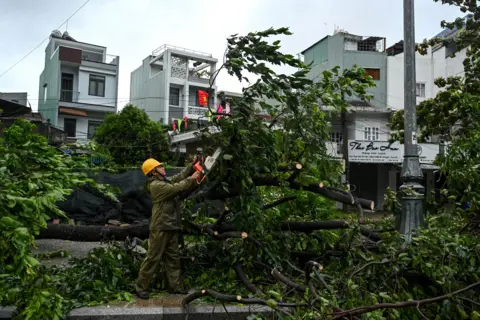
Towns along Vietnam's central coast were littered with debris this morning after taking the full brunt of the storm overnight. The strong winds uprooted trees, tore off roofs, and smashed large windows. Thousands of people sought shelter in schools and other public buildings as the army was deployed to help deal with the damage.
Vietnamese authorities have warned of possible flooding in low-lying areas. Central Vietnam has already seen record rainfall in the past week which has killed 50 people. Earlier this week, the same storm devastated parts of the Philippines when heavy rainfall sent torrents of mud down hillsides and into residential areas, obliterating some poorer neighborhoods.
The death toll reported on Friday was a jump from the 114 reported the previous day, with another 135 people listed as missing. The Philippines government has declared a state of calamity across the country in anticipation of another typhoon forming in the Pacific.
Ahead of Typhoon Kalmaegi, Vietnam's military deployed more than 260,000 soldiers and personnel for relief efforts, along with over 6,700 vehicles and six aircraft. Some airports and expressways were closed, and hundreds of thousands were evacuated.
Typhoon Kalmaegi, referred to locally as Tino, left a trail of devastation in the Philippines, particularly in central areas like Cebu, where cars were swept through the streets. The storm dumped a month's worth of rain on the island in just 24 hours.
Many survivors are now tending to the wreckage of their homes, with some reporting they were unable to salvage anything as they were overwhelmed by the force of the storm.
As response efforts continue, Vietnam's Prime Minister has emphasized the need for urgent assistance to reach isolated areas, ensuring that people have food and essential supplies.