In brief
Sussan Ley's brief leadership of the Liberal Party has sparked discussions on gender representation in Australian politics. Many argue that her promotion during a crisis exemplifies the 'glass cliff' phenomenon, where women are placed in precarious positions that preclude their success. With Ley's removal amidst claims of underperformance, the Liberals face scrutiny over their commitment to gender diversity and effective leadership, reigniting debates about women's roles in high-stakes political environments.
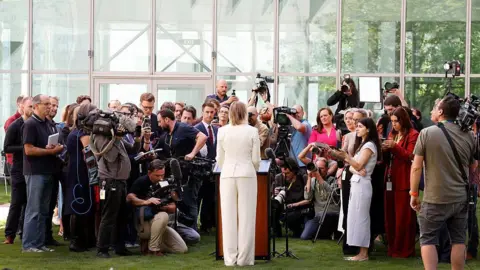
When Sussan Ley made history as the first woman to take the reins of Australia's Liberal Party, she insisted this was a pivotal moment for the party – or what was left of it anyway.
She had broken through the glass ceiling: an invisible, patriarchal barrier which keeps women from positions of power. But to many, Ley's glass ceiling looked an awful lot like a glass cliff, and it felt like it was only a matter of time before she lost her grip and slipped off it.
The glass cliff describes a phenomenon where women and other minorities are promoted to leadership roles during times of crisis, setting them up for a high risk of failure. In essence, it says that when women are finally allowed to ascend to the top, it's frequently so they can take the fall.
Elected as leader after the most resounding election defeat in the history of the modern Liberal Party and amid internal party chaos, Ley didn't even survive a year. On Friday she was pushed out by Angus Taylor, who argued she didn't have what it takes to turn the opposition's fortunes around. He won a leadership ballot 34 to 17, with Senator Jane Hume elected as his deputy.
Ley's backers claim she was never given the chance to succeed, with some saying gender played a role. Her opponents say her demise has nothing to do with that and everything to do with performance. The messy saga has reignited conversations in Australia about its progress towards making its politics look more like its population.
Whoever took over as Liberal leader after the Labor landslide in May last year was always going to have a tough job. They had to unify the polarised factions of the party and manage an increasingly toxic relationship with their coalition partner of eight decades, the National Party. They had to overhaul a policy platform which was comprehensively rejected by voters while balancing the demands of the more conservative sects of the Coalition with the more progressive desires of voters in urban areas.
Michelle Ryan, Director of the Global Institute for Women's Leadership, said Ley's situation exemplifies the classic glass cliff scenario of female leadership in times of crisis. Ley’s supporters believe her dismissal illustrates a deeper issue within the Liberal Party regarding the acceptance and support of women leaders.
With women now comprising around a third of the Coalition party rooms, contrast this with the Labor party's majority of women in the caucus, and it's clear that systemic issues persist in terms of representation. Ley's removal could signify a critical moment of reflection for the Liberal Party as it grapples with the task of adapting rapidly to a modern electorate and addressing the very real gender imbalances that continue to affect political leadership.
Recent developments within the Liberal Party reflect disorganization and disunity, marking a challenging time for the party as it tries to reconcile its future leadership strategies while facing criticism for its treatment of female leaders.