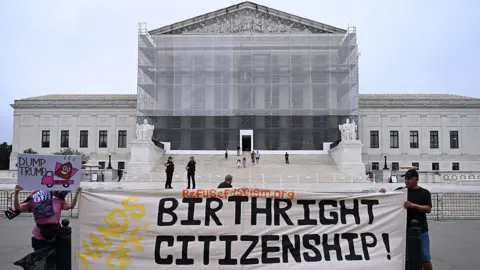
WASHINGTON (AP) — The U.S. Supreme Court has agreed to take on the constitutionality of President Donald Trump’s executive order regarding birthright citizenship, which restrictively states that children born to parents who are illegally or temporarily in the U.S. are not American citizens. The justices will examine Trump's appeal following a lower-court ruling that declared the citizenship restrictions unconstitutional.
This pivotal case is slated for argument in the spring, with a definitive ruling anticipated by early summer. Trump's birthright citizenship order was officially signed on January 20, the first day of his second term, and is a significant aspect of his administration's broader immigration policy.
Every lower court to address the issue has concluded that the order violates the 14th Amendment, initially conceived to grant citizenship to former slaves and their descendants. The courts have suggested that the longstanding principle of citizenship by birthright, which includes children born within U.S. borders, is likely unassailable.
In July, a federal judge blocked the citizenship order following a class-action lawsuit that aimed to protect all affected children. The court found the order in alignment with historical interpretations of the 14th Amendment.
Twenty-four Republican-led states and numerous party lawmakers have voiced their support for the administration's stance, urging that non-citizen children do not fall under U.S. jurisdiction, thus denying them citizenship rights.
This landmark case not only reflects the intense legal tussle surrounding immigration policies but also raises critical questions about the foundational tenets of citizenship in the United States as the nation grapples with evolving immigration challenges.