In brief
A wave of retirements is driving a shift from traditional sales to employee ownership, as illustrated by Softstar Shoes, Stockwell Elastomerics, and SilkoTek. The move preserves local jobs, keeps businesses in the country, and offers workers stakes in profits. Employee‑owned firms tend to be more productive, retain staff, and offer better wages. As the US government supports the transition, more owners may follow suit in the next decade.
When a seasoned founder reaches retirement age, the instinct is to sell the company to a larger corporation. In recent months, a growing number of US business owners instead chose to hand the business over to their own staff. The result? Employees become shareholders, and the firms that follow are showing higher productivity and lower staff turnover.
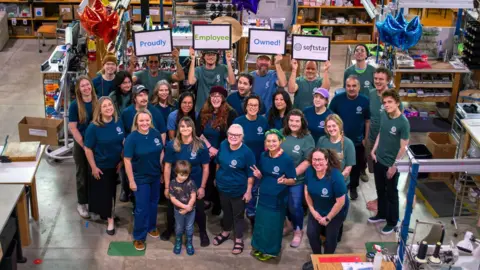
Softstar Shoes in Oregon began this path in January: 30 employees bought the company through an Employee Ownership Trust (EOT). CEO Tricia Salcido, now serving as chief financial officer, reports that employees now email her ideas that were previously unheard of. “I’m getting personal emails from employees saying, ‘have you thought about this idea?’” she says, highlighting a newfound collaborative culture.
That move preserves local jobs and keeps a cherished craft on American soil, something Salcido feared a corporate acquirer would relocate the production. Employee‑owned companies, according to a 2023 study, boast up to an 8–12% productivity boost, lower redundancy rates, and a willingness to pay higher wages.
“The only way to truly create wealth in this country is through ownership of capital. And this is a way to democratise that,” says Harvard’s Ethan Rouen.
Other firms are following suit. William Stockwell sold his company, Stockwell Elastomerics, via an Employee Stock Ownership Plan (ESOP), allowing staff to hold shares that can be cashed in upon departure. Paul Silvis is in the process of hand‑off at SilkoTek Corporation, confident that staff will steward the business into a “different economic future.”
The transition is not without cost. Owners abandon the immediacy of a cash deal for a longer wait and the risk that future profits may falter. Still, the shift can cost less than the hidden cost of a corporate takeover that could accelerate layoffs and relocate production.
With over 6,600 US enterprises under ESOPs and 600 sellers per year as of 2025, the trend is accelerating. Harvard researchers say a “silver tsunami” of retirements will fuel a once‑in‑a‑generation wave of ownership transitions, and the U.S. Department of Labor’s Employee Ownership Initiative is offering advice and incentives.
If you’re a retiring founder, start planning early. “It’s not something you want to begin the year you want to retire,” cautions Stockwell. With bipartisan support in Congress and growing financial infrastructure, employee ownership could become the new standard for sustaining small businesses into the next generation.