In brief
Xi Jinping's visit to Russia highlights a complex partnership between two nations facing scrutiny on the global stage, as Xi navigates potential diplomatic pitfalls.
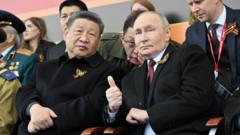
Chinese President Xi Jinping's recent appearance alongside Russian President Vladimir Putin at Moscow's Victory Day parade has stirred discussions on the evolving dynamics between the two nations. Xi's position at Putin's side during the parade—a symbol of alliance—belies a more intricate relationship driven by geopolitical necessities.During this visit, his 11th since taking office in 2013, Xi described the China-Russia relationship as "unbreakable," echoing a sentiment of mutual support that resonates strongly as both leaders face external pressures. While their shared history has fostered numerous encounters—over 40 meetings—observers note that the alliance's visible camaraderie masks underlying tensions and competitive interests. Political analyst Mathieu Boulegue from the Center for European Policy Analysis points out that their bond is not as simple as it appears: "They can be friends on one end or cooperating on one end and then ripping each other apart on others." This duality reflects the reality that both nations seek to position themselves powerfully against a backdrop of shifting international relationships.Xi's careful navigation becomes apparent considering Putin's controversial actions, namely the invasion of Ukraine, which has isolated Russia and tainted its image worldwide. China finds itself in a critical position, balancing its ties with Russia against the need to attract potential partners wary of its alignment with an "international pariah."To this end, China has intensified its outreach toward Europe, projecting an image as a stable ally amidst the backdrop of fluctuating U.S. political undertones. Encouraging developments include congratulatory communications between European leaders and Chinese officials, marking 50 years of bilateral relations. Such overtures signal Beijing's intent to foster a broader diplomatic base independent of its Russian connection.However, Xi's insistence on a close relationship with Putin could backfire if it alienates European nations during a time when they're increasingly seeking alternative alliances. Xi's challenge is to maintain a delicate balance—supporting Russia without undermining China's prospects for partnership with the West.Adding another layer to this diplomatic maneuvering, Xi’s engagement also serves as a response to past U.S. administrations, namely highlighting potential efforts by former President Donald Trump to drive a wedge between Beijing and Moscow. Xi aims to assert that such attempts will not succeed. His statements in Russian media emphasize the harmonious ties meant to counteract external pressures, painting both nations as champions against U.S. influence.Nonetheless, Xi must remain cognizant of the shifting power dynamics; Russia's military and economic shortcomings mean that it increasingly relies on China, disrupting the once-equal footing they shared. Boulegue notes, "Russia needs China much more than the opposite is true," suggesting a nuanced shift in their relationship's power dynamics.As Putin and Xi continue to present a united front, the larger international context remains fraught with potential conflicts that could surface as both countries navigate their future interactions. Behind the smiles, handshakes, and public declarations lies a complex web of alliances and challenges that both leaders must steer carefully in the coming years.