In brief
The United Nations’ World Food Programme (WFP) has announced a drastic reduction in the number of Palestinians it will serve in Gaza, cutting aid from 1.6 million to 1.1 million people. The decision comes as funding for the agency’s Palestinian operations falls to less than half of last year’s level, leaving a $450 million funding gap for the next six months. Families will receive fewer hot meals, less regular flour and ration boxes and will have to rely even more heavily on scarce cash transfers. The cuts arrive as winter threatens a population largely dependent on aid and with limited access to clean fuel and markets, raising the risk of a severe food security crisis. Local voices describe the situation as a “disaster”, citing the shortages of food, cooking fuel and basic household necessities in a region already hit by war and displacement.
The World Food Programme (WFP) has announced that it will cut the number of Palestinians it can help by a third, from 1.6 million to 1.1 million, as it faces a severe funding shortfall.
The cuts will hit just before the coldest months of the year, a time when families in Gaza already struggle to reach basic nutrition. Daily hot meals served by community kitchens will fall from 250,000 to 150,000 per day, and those in hard‑to‑reach zones—including the area near the Israeli “Yellow Line”—will receive one meal only every other day.
The WFP is now able to support only about 600,000 families per month with flour and ration boxes, a reduction from the 1.1 million it could previously provide.
An article from the WFP’s Palestinian director, Shaun Hughes, stresses that the cuts are not due to a drop in need: “The WFP is forced to reduce assistance because of finances, not because the needs are going down or because we don’t have access—we do.”
The region, which houses 2.1 million people—almost all of whom are displaced or living in temporary shelter—has a high dependence on aid: in a world where more than 80 % are unemployed, local food markets are rarely affordable. The lack of cooking gas, classified by Israel as a dual‑use item, means families have turned to expensive wood or even burning plastic and cardboard to heat food.
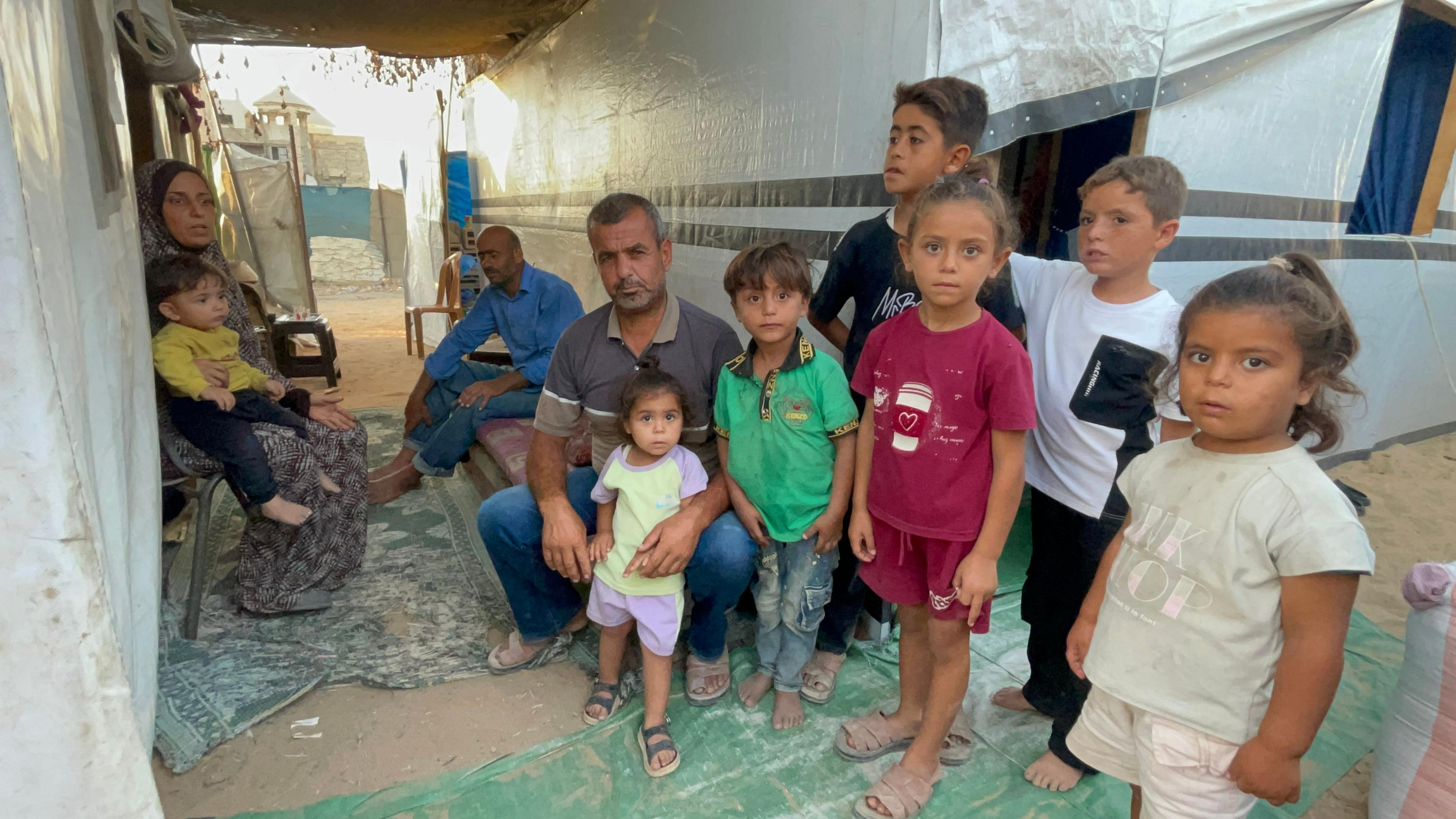
Dalal al‑Dahdouh, a mother of eight, says the ration boxes are already insufficient: “The flour isn’t enough and the food boxes aren’t enough either. We fear the new cuts will have a major impact.” She recalls life before the war—own land, fresh vegetables and “proper sanitation.” Now, she and her family rely almost entirely on WFP vouchers.
Sawsan Bahloul, a mother of three from al‑Mawasi, expressed similar worries. She described how her children sometimes wait for the community kitchen to open for a meal: “Sometimes we wait for these meals to eat. This will affect us a lot, the daily aid was somehow ticking the box but now it will be every two days.”.
In July, the Integrated Phase Classification reported that two‑thirds of Gaza’s population—about 1.4 million people—were expected to face crisis or worse levels of acute food insecurity. Despite a modest improvement compared to the previous year, the risk of famine remains high.
The WFP says it can still support bakeries that provide water‑ and bread‑needs for a third of the population, feed about 300,000 women and children with nutrition assistance, and tally health snacks for roughly 200,000 children.
The direct impact on Gaza’s already vulnerable ecosystem is a matter of growing concern. When access to fuel and market goods is limited, households resort to burning combustible waste, aggravating air pollution—already heightened by wartime damage to infrastructure—and contributing to a vicious cycle of environmental degradation that can also hamper any future food production or agronomic initiatives.
The funding gap is acute: the WFP has said it urgently needs $450 million (about £338 million) to sustain critical operations during the next six months. With total funding for Palestinian operations falling to less than half of last year’s level, the agency is scrambling to secure proposals that can meet the agencies' constraints while preserving a lifeline for those left starved.
Humanitarian workers echo the feeling of a looming food crisis, noting that while Gaza may have seen modest gains relative to a year ago, the lack of reconstruction and the ongoing Israeli control over crossings make recovery a distant prospect.
In this environment of chronic insecurity, resilient, climate‑smart local food systems, and alternative energy solutions become beacons of hope. Though the present cuts are a severe blow, long‑term solutions—such as sustainable agriculture, rainwater harvesting, and community‑run renewable energy projects—could offer pathways to self‑reliance that mitigate future humanitarian shocks.