In brief
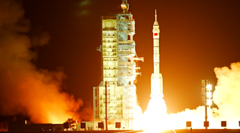
Following a triumphant launch, China's Shenzhou 19 has docked with the Tiangong space station, marking a new chapter in the country's ambitious space programme aimed at lunar colonization by 2030. The three-person crew, which includes China's first female space engineer, Wang Haoze, will engage in six months of research and spacewalks. At the launch site, festivities filled the air with national pride, as citizens celebrated their rapidly advancing space capabilities amidst concerns voiced by the United States regarding China's intentions in space.
In a notable achievement, China successfully launched its Shenzhou 19 spacecraft, carrying a three-member crew, including its pioneering female astronaut, Wang Haoze. The spacecraft docked with the Tiangong space station after a seamless six-hour journey. This mission is part of an extensive plan by Beijing, which has outlined around 100 space launches for the year as it competes with the United States in space exploration and research.Celebrations erupted in the town of Dongfeng Space City, where vibrant displays of national pride and excitement filled the streets as citizens waved flags and sang for their taikonauts—the Chinese term for astronauts—leaving to embark on their journey. The Shenzhou 19 crew will be stationed at the space station alongside astronauts from Shenzhou 18, who are scheduled to return to Earth shortly.During the excitement, veteran pilot Cai Xuzhe expressed hope for future achievements, rallying his younger crewmates’ “youthful energy” as an inspiration for success. The mission symbolizes a generational shift in China's space program, highlighting a focus on youth involvement and investment in future space endeavors. China's growing ambitions include plans for lunar missions, resource exploration, and a proliferation of a satellite constellation to rival existing systems like SpaceX's Starlink. As the nation sets sights on the Moon—rich in potential resources—the stakes continue to rise amid increasing scrutiny from U.S. government officials who view the fast-paced advancements as a significant threat.Despite accusations of competition and militarization of space, Chinese officials advocate for peaceful exploration, emphasizing the collaborative potential of space research. As the race for lunar dominance heats up, China remains determined to overcome technological challenges and establish its presence beyond Earth.Accompanied by heightened security and PR measures, the nation’s advancing space program serves as a point of both national pride and international concern, illustrating the complexities of modern space exploration amidst growing geopolitical tensions. China’s trajectory in space stands as a pivotal aspect of its future strategy, seeking to make long-lasting contributions to humanity, even as global rivalry looms over the horizon.