In brief
The Doerner Fir, a 450-year-old tree in Oregon, is threatened by a fire that has burned off about 50 feet of its height. With proactive firefighting measures underway, the objective is to save this towering landmark amidst challenging conditions.
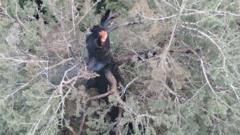
Firefighters in Oregon are urgently battling a fire threatening the Doerner Fir, one of the tallest and most historic trees on the planet. Standing at over 325 feet (99 meters) tall and estimated to be around 450 years old, this majestic giant has already lost about 50 feet of its height to the ongoing blaze, raising concerns about its future standing in global height rankings.As hot and dry weather continues to impact the Oregon Coast Range, the firefighting teams are facing increasing challenges in extinguishing the flames. Creative solutions are being debated, including the construction of scaffolding to access higher up the tree and combat the blaze from above. The cause of the fire is still under investigation, with lightning currently eliminated as a possible source. An infrared drone assessment on Tuesday revealed that while no active flames or smoke were present at the tree’s summit, the heat was detected inside a cavity located approximately 280 feet from the ground, according to Megan Harper, a spokesperson for the federal Bureau of Land Management.Despite the damage, Harper emphasized that the tree remains a magnificent natural wonder, though she couldn't predict its rank following the fire. "We've lost about 50 ft of it due to fire and parts falling out,” she noted. “However, the tree is so substantial that it would take extensive time for it to burn fully."Efforts by the Coos Forest Protective Association, including helicopter bucket drops, have reportedly diminished fire activity near the top of the tree. Additionally, sprinklers and containment lines have been strategically set up around the base to aid in the fight against the flames. A helicopter remains on standby to provide support as the situation unfolds.