In brief
Amid escalating tensions surrounding Yoon Suk Yeol's impeachment, a powerful wave of anti-communism is gripped South Korea. Supporters rally around the narrative that the opposition seeks closer ties with North Korea, invoking the age-old fears rooted in the traumatic history of the Korean War and its aftermath. This article delves into the psychological and political implications of these conspiratorial beliefs, highlighting the possible ramifications for South Korea’s democratic fabric.
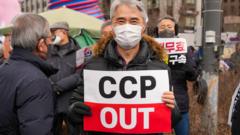
On a cold January day, the South Korean Constitutional Court buzzed with tension as the suspended President Yoon Suk Yeol faced his impeachment proceedings. Young pharmacy student Shin Jeong-min embodied the fears echoed by many of Yoon's supporters as they raised their voices in unison: "Release him now. Cancel his impeachment." She, like others, expressed a visceral fear that a left-leaning opposition victory would usher in communist rule and unify the South with North Korea under Kim Jong Un.At just 22, Jeong-min stands out as a symbol of a generational shift; she resonates with an aging populace historically hardened by memories of North Korean threats. The tanking popularity of Yoon peaked at a time when he controversially declared martial law in December, labeling the opposition party infiltrated by "North Korean communist forces." This narrative, devoid of credible evidence, was aimed at strengthening his desperate grip on power, prompting swift actions to restrict political discourse.Contradicting decades of careful political division, Yoon’s supporters are increasingly convinced that South Korea's vibrant democracy teeters on the edge of a leftist dictatorship necessitating drastic state intervention. "This is a war between communism and democracy," echoed a fervent office worker at the court. For many, past threats from North Korean operatives, while diminished, have evolved, now manifesting as dangerous rhetoric against what they perceive as pervasive leftist ideologies.Despite shifts in geopolitical dynamics, Yoon has effectively resurrected historical fears, casting the opposition as a potential threat to national integrity. Sociologist Shin Jin-wook described how Yoon's rhetoric mirrors that of authoritarian regimes from South Korea’s past. Former enemies are now allies in the eyes of many, with North Korea representing a constructive mode of discussion rather than a propagandized enemy.Amid the backdrop of Yoon's administration, unsubstantiated inquiries into alleged electoral imperfections have gained traction, further polarizing the electorate. In gatherings, supporters cite the past Democratic Party administration’s diplomatic overtures toward North Korea as evidence of a predisposition toward communist influence. This furor has successfully legitimized long-held beliefs that the election outcome was compromised, pushing many into conspiratorial thinking.As paranoia grows, it appears the distrust stretches beyond North Korea, surfacing in attitudes toward China, illuminating fears of foreign influence seeping into domestic affairs. With a younger generation less attuned to the Cold War’s dangers, the looming specter of communism has shifted focus to the competitive rise of China. This perceived encroachment has created a potent vein of nationalism among South Korea's youth during a time of economic uncertainties.Yet critical voices remain, warning against the deluge of anti-communist sentiment. Despite this, fears surrounding a potential erosion of democracy loom heavily, akin to a political specter haunting South Korea's landscape. As the sociopolitical climate grows more polarized, experts mark this era as one replete with risks of detrimental division.Observably, South Koreans, primarily the youth, appear responsive to an increasingly radicalized narrative shaped by digital platforms and burgeoning right-wing movements. Political scientists caution that long-standing democratic principles could be undermined, likening the growth of Yoon's support base to an entrenched cult-like following.Unfortunately, as unsubstantiated claims gain momentum and political trust erodes, the implications for South Korea's democracy could reverberate long after this period of unrest.