In brief
The dramatic retreat of Hektoria Glacier over recent years has sparked scientific discussion regarding its causes and consequences. A new study suggests that the glacier experienced rapid destabilization, potentially leading to accelerated sea-level rise. However, this theory faces skepticism from some researchers, highlighting the ongoing debate in understanding glacier dynamics amid climate change.
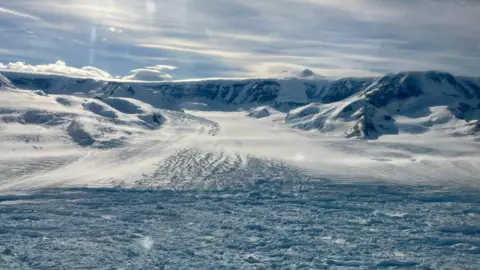
The Antarctic Hektoria Glacier has become the center of a scientific investigation following its rapid retreat, which measured more than 8 kilometers in just two months back in late 2022. The causes of this sudden change have puzzled scientists, leading to intense research efforts to understand the mechanisms behind it.
The recent findings indicate that Hektoria Glacier may represent the first modern instance of a glacier front, usually resting on the seabed, experiencing such significant destabilization. This has raised alarms about the implications for sea-level rise if similar conditions were to arise in other parts of Antarctica.
Critics of the study argue that the glacier was floating, which would indicate that while its retreat is noteworthy, it may not be entirely unprecedented. Floating tongues of glaciers, known as ice shelves, are more susceptible to melting from warmer ocean waters beneath.
Hektoria Glacier's retreat is undeniably striking, having moved approximately 25 kilometers between January 2022 and March 2023 – a figure corroborated by satellite data. The challenges of elucidating the causes of this shift have prompted lead author Naomi Ochwat to liken it to a ‘whodunnit’ mystery.
The issue traces back to the collapse of the Larsen B ice shelf in 2002, which previously served as a barrier preventing Hektoria's rapid movement. Since that disaster, changes in sea-ice conditions have further destabilized Hektoria, with calving events becoming commonplace.
What is particularly alarming is the possibility that the glacier’s front was grounded on the seabed, causing it to retreat at nearly unprecedented rates. The authors of the study suggest that forces from warmer ocean waters might be contributing to this rapid retreat, a phenomenon not previously observed in modern times.
However, the debate continues, with some scientists expressing skepticism about the grounding line’s precise location, a factor critical to determining the nature of the glacier’s behavior. As discussions swirl amongst glaciologists regarding the precise impacts of climate change on Antarctic ice dynamics, there is consensus that these changes are occurring faster than previously anticipated.
In summary, understanding the forces driving Hektoria Glacier’s retreat not only contributes to our knowledge of Antarctic ice dynamics but also holds critical implications for global sea-level projections as climate change continues to evolve.