
In the early hours of 10 June 2026, Ukrainian forces launched an FP‑5 Flamingo cruise missile that penetrated deep into Russian territory, landing on a missile and drone manufacturing site in Cheboksary, the capital of the Chuvash Republic.
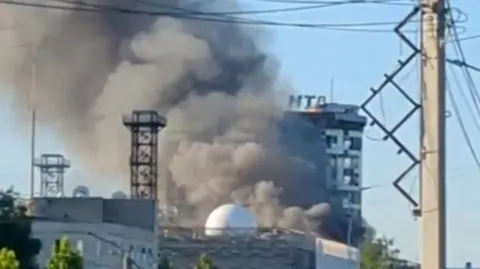
The Ukrainian president announced that the strike hit a plant that supplies the Russian army with drone and missile components. The destruction of a high‑tech industrial complex suggests a possible spill of chemicals used in production, such as solvents, plastics and metal alloys, all of which pose risks to the surrounding ecosystem and public health.
Beyond the immediate soil and air contamination, the strike adds to the growing CO₂ and NOₓ emissions generated by military activity. Studies estimate that modern war operations consume large volumes of fuel and energy, contributing to greenhouse gas output. In a conflict that is already high‑energy demand, any new attack magnifies climate impacts, especially when weapons manufacture and deployment continue unabated.
Russia’s industrial capacity for drones and missiles relies on a supply chain that depends on energy imports, rare metals and complex chemical processes. A hit on such a node can interrupt not only the war effort but also the availability of materials critical for renewable‑energy technologies elsewhere, further tightening global supply chains.
Local officials in the Chuvash Republic reported three injuries, but they did not disclose whether there was structural damage beyond the blaze. Even a single incident of chemical release can trigger long‑term remediation efforts and offset any short‑term military advantage.
While Ukraine’s air force counters Russian drone strikes, its own launches carry a 1,150‑kg warhead capable of dispersing hazardous payloads over a broad area, putting major Russian cities within range. The long‑term environmental obligations of such weapons, from launch to decommissioning, remain largely unaccounted for.
In this context, the war’s environmental dimension calls for international oversight. Environmental safeguards should be incorporated into battlefield strategies to prevent irreversible damage to ecosystems that could threaten climate stability and human health.
As the front line remains largely static but high‑tech attacks persist, the world watches how each strike may influence the cost of war, the pace of environmental degradation, and the prospects for post‑conflict ecological recovery. A sustainable future will depend on the ability to align military objectives with planetary stewardship even amid the most turbulent times.