In brief
The last few weeks of debate‑stage showdowns paint a picture of a divided nation, with Republicans grappling over their alignment with former President Donald Trump and Democrats probing policy differences. Susan Collins has kept her distance from Trump, touting a record of crossing the aisle on matters ranging from climate to economic policy. While some candidates selectively engage in the discourse—Susan Collins acknowledges 91% of her votes fell alongside President Biden, while others skip debates entirely—periodic personal attacks erupt, such as accusations of antisemitism amid the Michigan Senate race. These confrontations fuel an atmosphere of heat and volatility that could spill over into ballot‑box outcomes. The very questions that a climate-aware electorate cares about are being sidetracked by politicking, underscoring the need for clearer, policy‑focused debates on climate and energy.
The last few weeks of debate‑stage showdowns paint a picture of a divided nation, with Republicans grappling over their alignment with former President Donald Trump and Democrats probing policy differences.
1. Not all Republicans are standing behind Trump
Senate candidates have been forced to confront the same question they were asked since 2016: how closely do they align with Trump? Those who have bucked the president in the past have generally struggled with voters, amid low approval ratings on issues such as the cost of living and high fuel prices.
A recent Reuters analysis found that two‑thirds of candidates in highly competitive House and Senate races broke with Trump in some way this cycle.
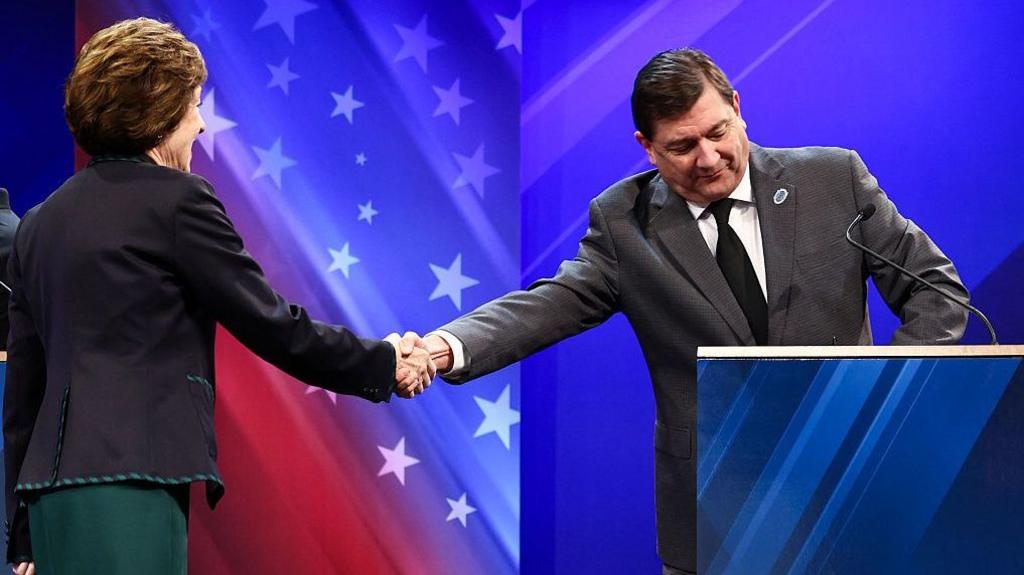
In Maine, Republican incumbent Susan Collins—running for a sixth term—distanced herself from the president, noting that she voted with President Biden 91% of the time and against Trump 137 times in the current Congress. Collins faces a tight race against Democrat Troy Jackson, former Senate president, with polls indicating a narrow margin that could swing either way.
2. Personal attacks are a common theme
A heated exchange in Michigan’s Senate race—between Democrat Abdul El‑Sayed and Republican Mike Rogers—featured a put‑down about a Muslim family on a watchlist, prompting El‑Sayed to counter that Rogers was a “sock puppet” for Trump, labeling him a coward and a liar.
In Georgia, Senator Jon Ossoff confronted Representative Mike Collins—known as a Trump supporter—over accusations that Collins’ campaign was promoting data‑center development in the state. Ossoff labeled Collins a “bigot” and even referenced a “Third Reich” connection, escalating the debate into a personal exchange.

3. Some candidates are skipping debates entirely
In 35 Senate seats up for grabs, 21 have no scheduled debates among the main candidates, according to an ABC News analysis. Texas voters will not see the Democratic state representative James Talarico and Republican Ken Paxton debate, despite Talarico’s growing popularity that could help Democrats flip the seat.
Talarico accepted four debate invitations from different networks, while Paxton declined all and told the media that he would debate only after July—a statement he has not followed. Trump, who backed Paxton, has urged the engagement and said the absence was a missed opportunity for voters to hear competing policy positions, especially on energy and climate concerns.
You can follow the twists and turns of the 2026 midterms and their implications for climate policy through our weekly US Politics Unspun newsletter.