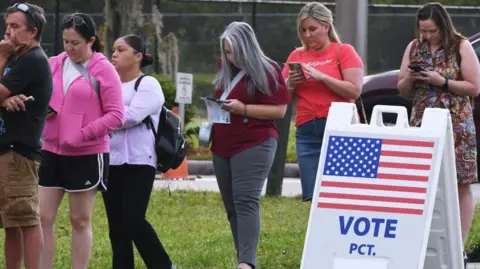
In a pivotal mayoral runoff on Tuesday, Eileen Higgins, a Democrat, faces off against Emilio Gonzalez, a Republican, in Miami—a city brimming with diverse immigrant populations. The election is being closely observed for its implications on party dynamics as both Democratic insiders and Republican figures stake their claims in the Hispanic-majority region.
If successful, Higgins would mark a historic victory as the first Democrat to lead Miami in 28 years, while Gonzalez aims to reinforce the GOP's hold in a locale influenced significantly by changing demographics and rising conservatism post-Trump’s presidency.
Prominent political figures from both parties have rallied to support their candidates. Florida Governor Ron DeSantis and Senator Rick Scott are joining forces with Gonzalez, while national Democrats including Senator Ruben Gallego and former Chicago Mayor Rahm Emanuel are advocating for Higgins.
This election comes amidst a backdrop of a shifting political landscape, evidenced by local sentiments mirroring broader national trends, especially among Latino voters. The outcome is pivotal, as the Miami contest could dictate party momentum leading into the approaching 2026 midterm elections.
Higgins, known for her grassroots approach and focus on local concerns like housing affordability, has also touched on national issues affecting marginalized communities, showcasing her bilingual persona as “La Gringa.” In contrast, Gonzalez emphasizes tax reforms and streamlined permitting for businesses while maintaining a hardline immigration stance.
As Florida’s second most populous city, Miami embody the diverse fabric of American life—a melting pot of cultures that could redefine its political affiliations in the future. With significant implications for both parties, this mayoral race is more than just local governance; it heralds the changing tides of voter aspirations in a multi-ethnic landscape.