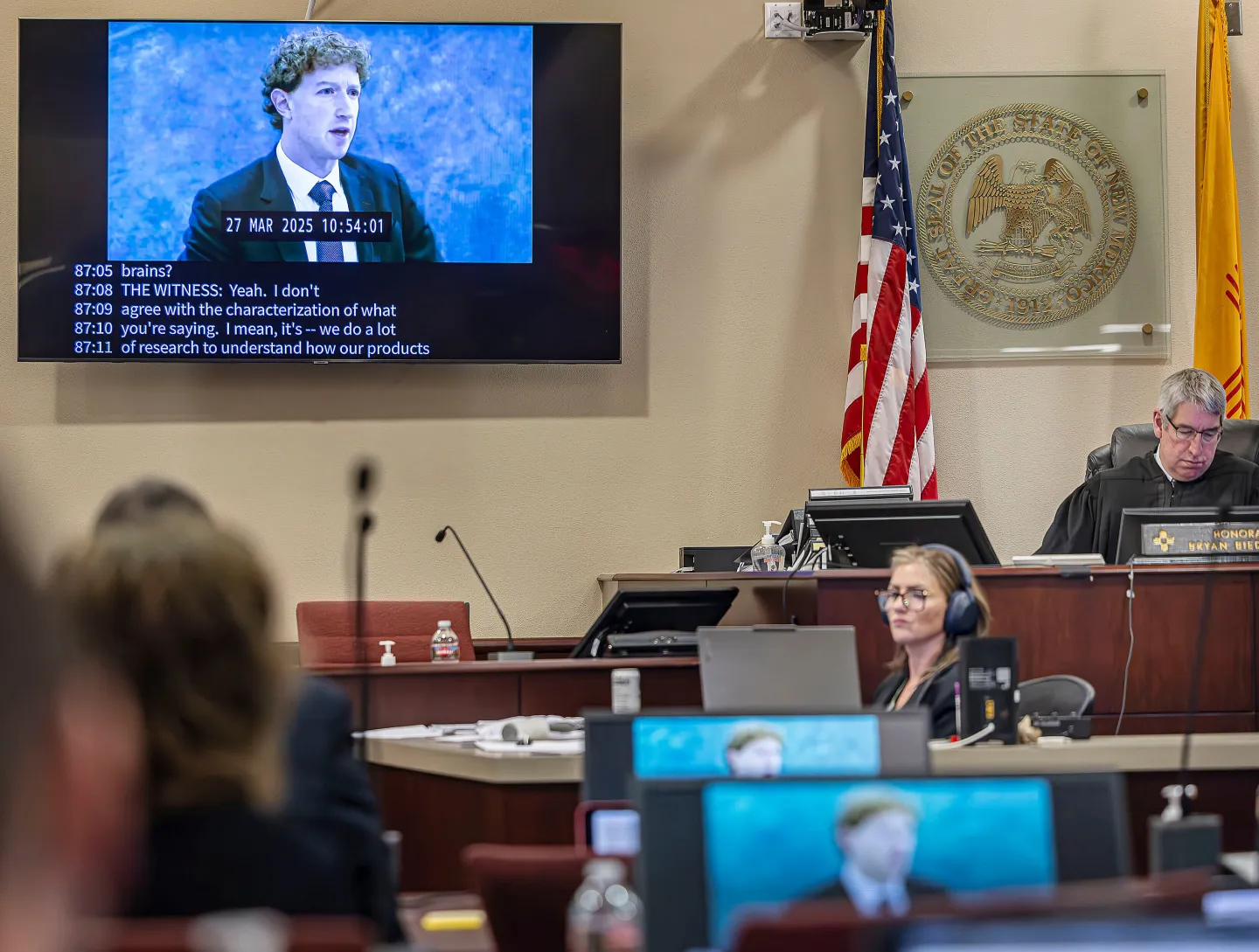
SANTA FE, N.M. — Closing arguments have begun in a monumental trial against Meta, the social media giant, as prosecutors in New Mexico allege the company misled users about the safety of its platforms for children. The jury is now deliberating after weeks of testimonies from witnesses, which included educators and mental health experts, painting a picture of a corporation prioritizing profits over user safety.
The state accuses Meta of violating consumer protection laws by fostering an environment where harmful content is rampant and algorithms promote addictive behaviors among youth. Linda Singer, one of the prosecutors, asserted in her closing statements that Meta has failed to protect its young users, saying, “It’s clear that young people are spending too much time on Meta’s products; they’ve lost control.”
Testimonies revealed alarming effects of Meta's algorithms, which purportedly recommend sensationalized content that fails to protect users under 18, complicating the enforcement of age restrictions. Prosecutors emphasized that young individuals suffer from increased exposure to harmful messages that could lead to severe mental health issues.
Attorneys for Meta counter the accusations, arguing that the company implements rigorous protections for teenage users, acknowledging there are instances where harmful content slips through. They describe the current lawsuit as a misrepresentation of efforts made by Meta to create a safer digital space.
During this significant trial, the prosecution is seeking over $2 billion in penalties against Meta, a request based on the notion that the company has engaged in repeated violations of state laws concerning consumer protection. A second phase of the trial will determine if Meta created a public nuisance by creating a platform that, according to prosecutors, serves as a breeding ground for online predators targeting children.
The outcome of this case could have sweeping implications, shaping how similar lawsuits across the country will be handled. New Mexico’s Attorney General Raúl Torrez filed the lawsuit in 2023, and the resolution of this case is closely watched by both advocates for child safety online and the tech industry.