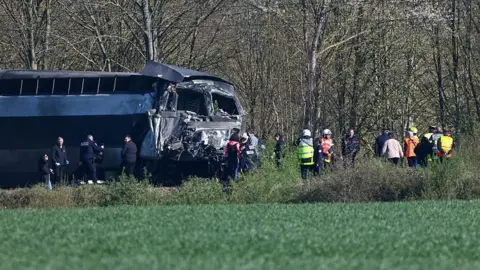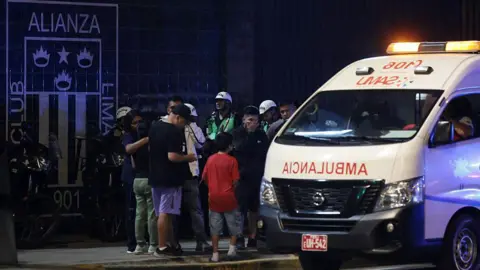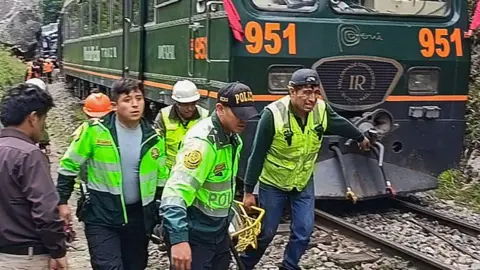
A passenger has described chaos after two trains collided head-on near Peru's most popular tourist attraction, Machu Picchu.
Niels Honkoop, 33, told the BBC he had switched seats part-way through the journey from the middle of the train to the back, before it crashed, injuring many of those sitting near the front.
I saw staff running around and people crying and people on the floor and chaos erupted, he said. We got off the train and I saw people bleeding with very severe injuries.
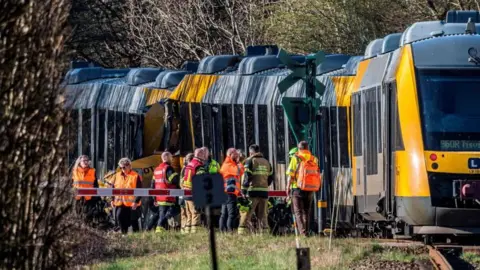
A train driver was killed and at least 40 others were injured in the crash, which took place at around 13:20 local time (18:20 GMT) on Tuesday.
Mr. Honkoop said the table in front of him broke in two. Shattered glass littered the floor of the carriage, and many were lying wounded in the aisle. One woman he saw was trapped between a bench and a table.
He tried to assist by moving luggage and handing out painkillers, as, by coincidence, I'd had a wisdom tooth removed recently so I had lots of painkillers on me.
The UK Foreign Office said it was supporting a number of British nationals involved in the crash, while the US embassy in Peru confirmed that American citizens were injured.
After the crash, Mr. Honkoop said another train arrived with medical assistance. He and his tour group were taken to a nearby village where they received food and medical care before being relocated to a hotel.
The collision occurred on the track linking Ollantaytambo Station and Aguas Calientes, the closest town to Machu Picchu. Under normal circumstances, the journey between the two stations takes around 90 minutes.
The two trains involved in the accident were operated by PeruRail and Inca Rail respectively.
PeruRail expressed its sorrow over the incident, stating their staff had immediately provided first aid to those involved.
The cause of the accident remains unclear, coming amid ongoing disputes between local transport providers, with communities unhappy about the bidding process for tourism services.
A visitor cap is in place to manage the preservation of Machu Picchu, a UNESCO World Heritage Site, but over-tourism continues to be a concern.