In brief
The death toll among monkeys at a Hong Kong zoo has risen to twelve due to a bacterial outbreak linked to contaminated soil, raising public health concerns and stressing the importance of habitat protection over captivity.
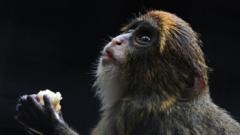
In a concerning development, a twelfth monkey has died at the Hong Kong Zoological and Botanical Gardens, where tests are currently being conducted to determine if it fell victim to the same bacterial infection that has claimed the lives of eleven other primates within the past ten days. The latest casualty, a De Brazza’s monkey, had been in isolation since October 13, following the initial reports of mortality among the zoo’s population.Autopsy results of the deceased monkeys have revealed a significant presence of sepsis-inducing bacteria, which indicate a probable contamination from soil located near their enclosures, according to Hong Kong’s Culture, Sports and Tourism Secretary. Investigations have suggested that zoo workers might have inadvertently introduced this contaminated soil by tracing it onto their footwear during nearby excavation activities.Although veterinary epidemiologist Dirk Pfeiffer from the City University of Hong Kong reassured the public that the risk of the infection being transmitted to humans remains “fairly low,” he acknowledged that such soil contamination issues are often overlooked in Asia. He further remarked on the seriousness of observing multiple animal fatalities in a captive setting, particularly one where such events had not previously occurred.Among the eleven monkeys that had already died are various species, including cotton-top tamarins, which are critically endangered, as well as white-faced sakis and common squirrel monkeys, alongside the initial De Brazza’s monkey. Authorities have identified melioidosis—an infectious disease caused by the soil-dwelling bacteria Burkholderia pseudomallei—as the cause of death in these cases, which can be contracted through contact with contaminated soil, air, or water.As of Tuesday, the latest monkey's death reinforced concerns, as initial findings suggested that it displayed “similar lesions” in its organ tissues as the others. Despite the grim situation, officials state that the health of the remaining 78 mammals in the zoo appears stable. However, as a precautionary measure, the mammals section has been closed since October 14 for thorough disinfection and cleaning.The Hong Kong Zoological and Botanical Gardens, noted as the city’s oldest park, spans over 14 acres at its central location. Meanwhile, animal rights organization Peta has voiced its worries regarding the potential risk of zoonotic diseases such as monkeypox, which have the capacity to affect humans.Peta campaign manager Abigail Forsyth emphasized the need to safeguard the welfare of both animals and humans, arguing that the prevention of disease spread requires a shift in focus from using animals for entertainment to protecting their natural habitats. Historical data indicates that the first records of melioidosis in Hong Kong trace back to the mid-1970s, when an alarming incident resulted in the sudden deaths of 24 dolphins at Ocean Park, a local amusement venue.