In brief
The discovery of kites near the Israeli Gaza border has prompted Defence Minister Israel Katz to vow a forceful response, suggesting the possibility of increased air strikes. Israeli forces have found several non‑explosive kites, citing these as tests by Hamas to gauge Israel’s reaction. Hamas denies responsibility, labeling the kites as harmless toys from displaced children and accusing Israel of using them as a pretext to break a ceasefire. Meanwhile, recent Israeli attacks have strained Gaza’s fragile situation, highlighting the escalating tension in the region.
Israel has warned Hamas that it will increase strikes on Gaza following concern over launches of kites, drones and balloons from the territory.
Several kites were found in an Israeli community near the border with Gaza over the weekend, local media reported.
"Forceful actions will be taken to put an end to this phenomenon," Israel's Defence Minister Israel Katz said on Monday.
Before the war, kites and balloons carrying incendiary devices were launched into Israel, causing fires that burned forest and farmland.
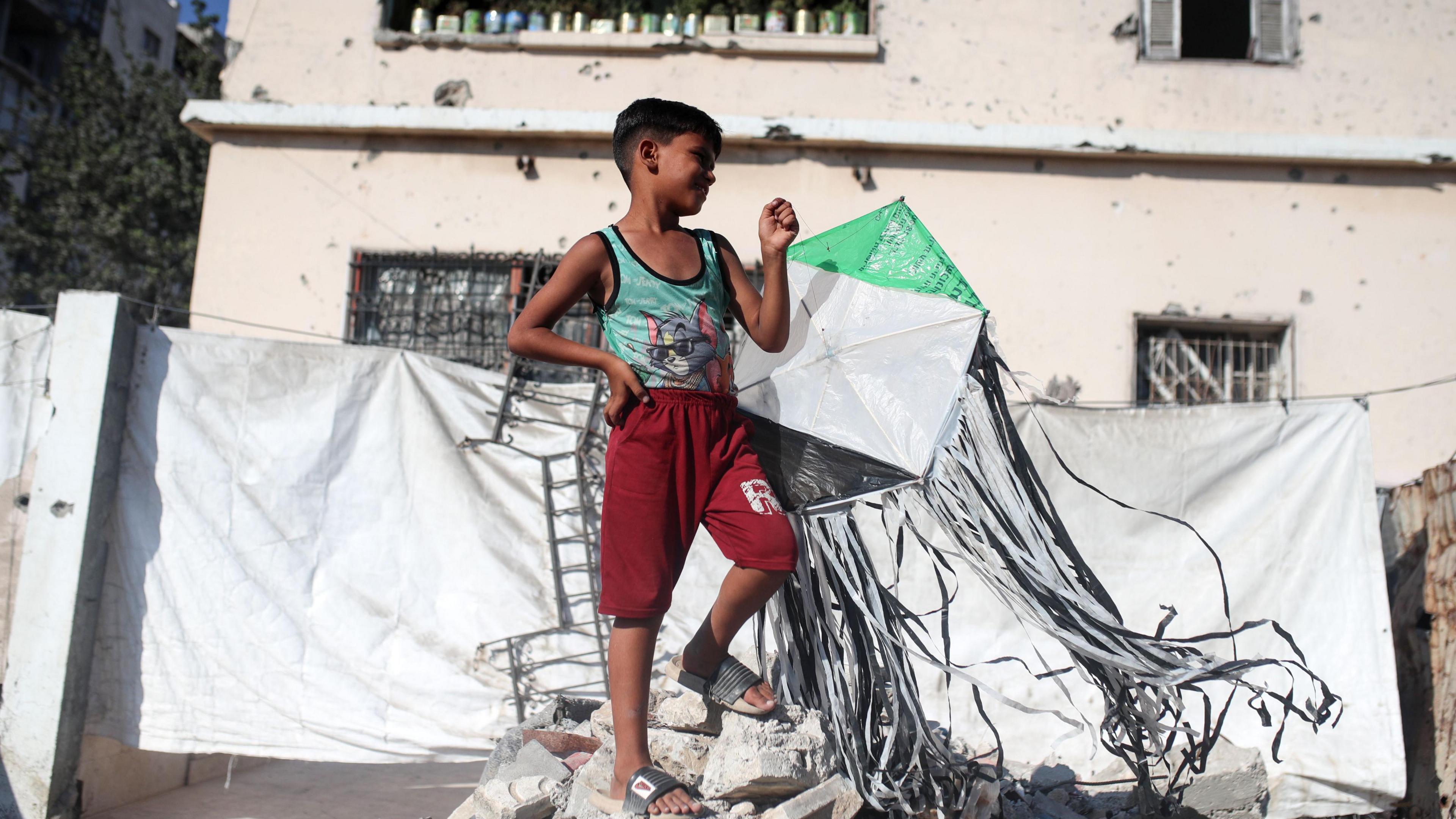
Hamas has denied responsibility for the new kites – which were not carrying explosives – and said they belonged to "children searching for their innocent childhood amid the rubble".
The group also accused Israel of using the kites as a "pretext" for continued air strikes in Gaza despite the ceasefire agreed last October.
Four kites were found in Kibbutz Nahal Oz, about 800 m from the Gaza border, on Friday and Saturday. Several more were found elsewhere in southern Israel last week, according to local media.
The Israeli reports cited military sources as saying they believed Hamas was behind the kites and that they might have been intended to test Israel's response.
No suspicious materials were attached to the kites and they did not pose a threat, the military said.
But Katz warned there would be "zero tolerance" and said: "A balloon is treated like a kite, and a kite is treated like a drone, with or without explosives."
Residents of Nahal Oz said in a statement that they feared the return of incendiary kites and balloons, adding: "We will not accept a policy of containment when it comes to our security."
Hamas warned of "the danger of the allegations and threats" from Israel and said the kites were "basically children's toys from displacement camps".
"These threats are based on fabricated pretexts and are an attempt to justify the continuation of the aggression and violations against our people," a spokesman for the group added.
On Sunday, Palestinian health officials said two people were killed and seven others injured in two Israeli strikes in Nuseirat refugee camp and the town of al‑Zawayda, both in central Gaza.
A four‑year‑old boy called Mohammed Taha was killed when a building in al‑Zawayda, just north of Maghazi refugee camp, was bombed, according to local media.
The Israeli military said it killed the commander of a Hamas weapons manufacturing site in the Maghazi area, whom it identified as Ismail Abu Ful, and that it had warned the residents to evacuate beforehand.
"There is no ceasefire, there is nothing," Abu Ahmed, a displaced man who had been sheltering nearby, told Reuters news agency. "We want solutions, we want to live in peace."
On Monday, Palestinian media reported that a man called Mohammed Abu Asad was killed in an overnight Israeli strike on a tent in the central town of Deir al‑Balah.
The Israeli military said Abu Asad was a member of the elite Nukhba forces of Hamas's military wing who had taken part in the Hamas‑led 7 October 2023 attack on southern Israel.
The Israeli military launched a campaign in Gaza in response to the cross‑border assault, during which about 1,200 people were killed and 251 were taken hostage.
More than 74,420 people have been killed in Israeli attacks in Gaza since then, including 1,288 since the ceasefire took effect, according to the territory's Hamas‑run health ministry.