In brief
Researchers from Ashoka University have developed a modeling study that simulates how H5N1, commonly known as bird flu, might leap from birds to humans. The findings stress the urgency of rapid public health responses to forestall outbreaks, particularly within high-risk communities. Notably, early quarantine measures can significantly contain the disease before it spreads beyond initial contacts.
For years, scientists have cautioned that bird flu—better known as H5N1—could leap from birds to humans, potentially triggering a global health crisis. Research sheds light on this issue as avian flu continues to persist especially across South and Southeast Asia. Since emerging in China in the late 1990s, human cases have been sporadic but devastating, with the World Health Organization reporting 990 cases and 475 deaths by August 2025, resulting in a staggering 48% fatality rate.
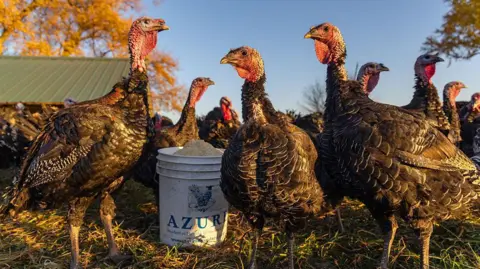
The H5N1 virus has impacted over 180 million birds in the U.S. alone and has stemmed into human infections, resulting mostly in serious health implications for those directly working with poultry. Most recently, there were fatalities involving tigers and a leopard from the virus at a wildlife rescue center in India.
Indian researchers Philip Cherian and Gautam Menon from Ashoka University have taken a significant step in understanding the H5N1 threat through a new peer-reviewed modeling study. This modeling study utilizes real-world data and simulates potential outbreaks of H5N1 amongst humans, providing insights into how the virus might spread and what timely actions can help to contain it.
According to the researchers, the threat posed by an H5N1 pandemic is real but manageable with improved surveillance and responsive public-health strategies. Their model highlights that an outbreak would likely begin with a single case—the result of an infected bird transmitting the virus to a human. While the immediate virus spread is concerning, the greatest risk lies in the possibility of secondary human-to-human transmission.
Utilizing an open-source simulation platform originally designed for Covid-19 modeling, the researchers created a synthetic community that mimics a real population. The study mapped primary and secondary contacts among villagers, focusing on a village in Namakkal, a major poultry area in India.
A key takeaway from the research indicates that rapid interventions can be vital. The simulations show that once cases exceed just two to ten, containment becomes increasingly difficult. Quarantine measures, if implemented at the first signs of infection within a household, can be effective at curbing a broader outbreak. However, once multiple cases arise, sustained transmission becomes likely, leading to an uncontrollable spread.
The findings also introduce a caution against premature quarantine, which could lead to increased household transmissions. Guided attempts to contain the virus could empower public health systems to better respond to fluid and rapidly evolving outbreak scenarios.
The research ultimately portrays a scenario that supports the need for immediate and decisive action to prevent a potential H5N1 pandemic, underscoring that timely public health responses are key to controlling outbreaks while noting that complacency in the face of such potential threats can lead to dire consequences.