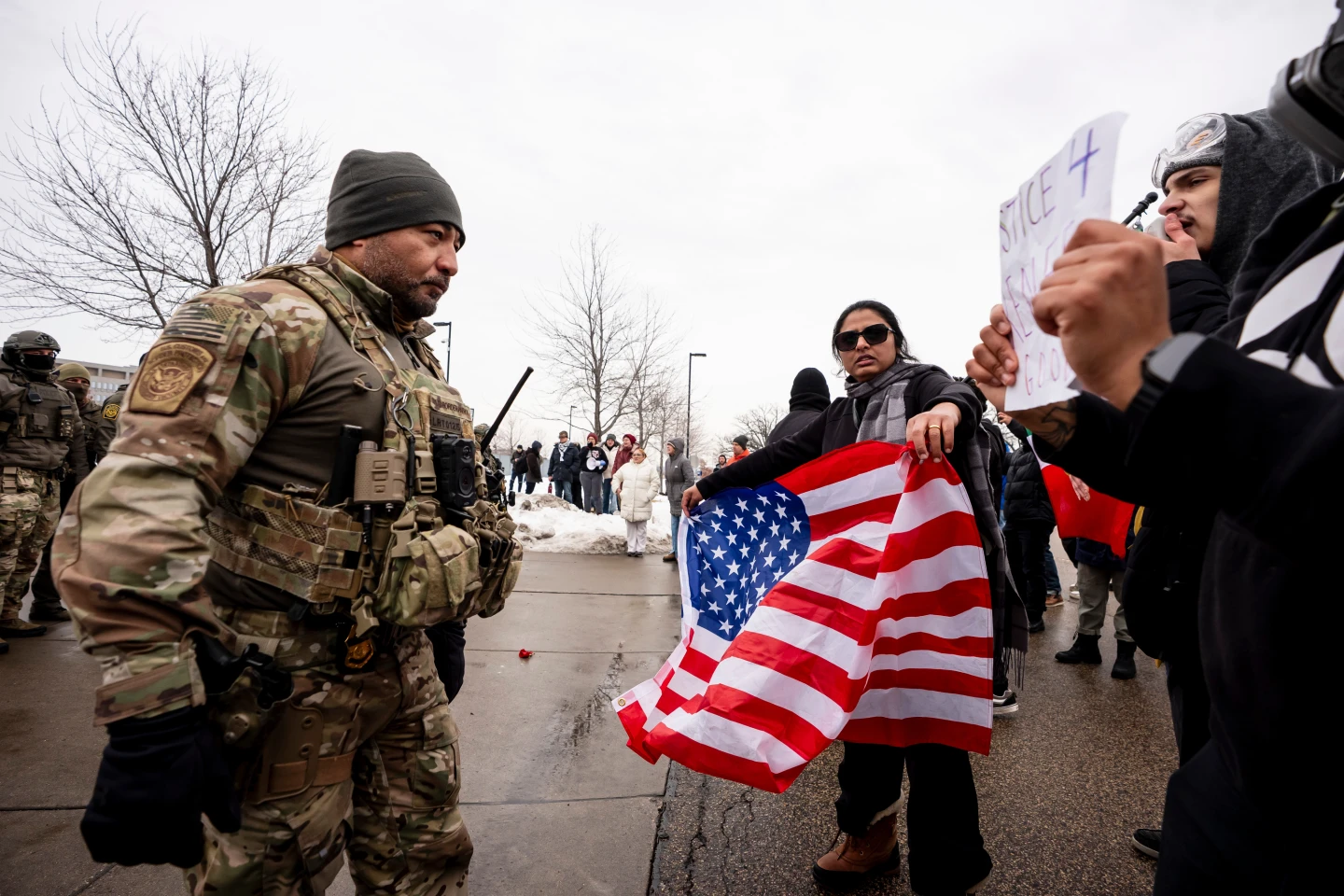
The shooting of a woman by a federal immigration officer has triggered an escalating dispute between federal and state authorities. Renee Good, a 37-year-old woman, was shot in Minneapolis during an ICE operation. In the aftermath, federal authorities have declared that Minnesota lacks jurisdiction to investigate, preventing state officials from accessing critical evidence.
Legal scholars highlight the fundamental issue at play: whether federal officers conducting authorized operations can be prosecuted under state law. The FBI has denied participation by Minnesota law enforcement, which state officials argue undermines the independence of the investigation.
Governor Tim Walz has appealed to federal agencies to reconsider their stance, emphasizing the importance of public confidence in the investigation. Experts warn of the complex legal challenges involved in potentially prosecuting a federal officer, noting the existence of limited precedents and constitutional protections that may apply.
As the situation develops, the Attorney General Keith Ellison suggests that state officials may still pursue their own investigation, while Hennepin County sources argue that without federal cooperation, they could remain in the dark about crucial findings. The investigation's overall credibility and approach to justice will remain under scrutiny as federal and state relations continue to unfold.