In brief
As temperatures climb to 40 °C in France’s Gironde region, wildfires are raging and residents are fighting back with daring aerial drops and community‑led ground teams. Local volunteers, armed with water tanks and fierce resolve, assist professional crews in dousing flames and protecting homes. The crisis underscores how climate change turns forests into battlegrounds, demanding local resilience and innovative firefighting techniques. Yet hope persists, as the community’s united effort illustrates that even in a climate emergency, human ingenuity can still hold the line.
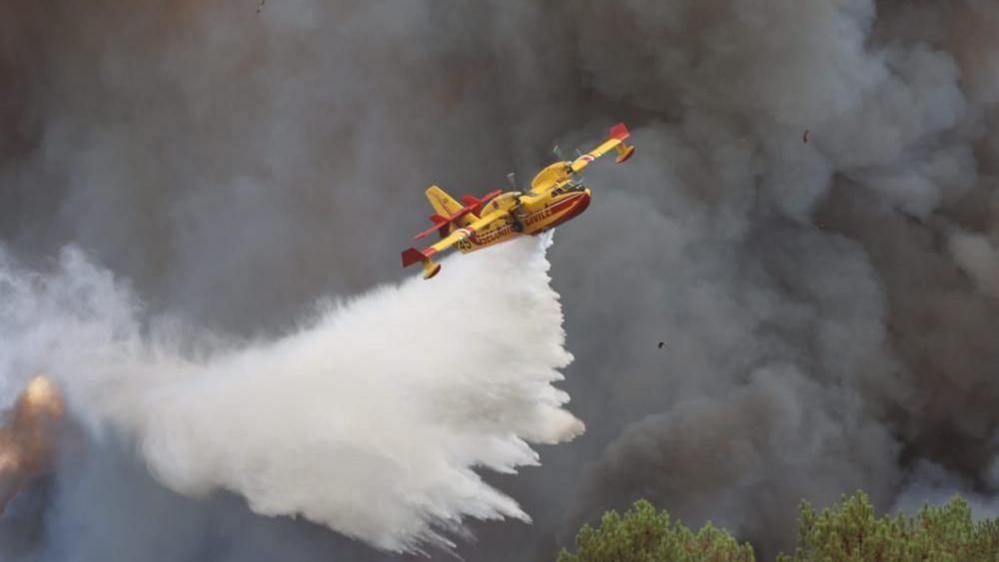
A flurry of Canadair aircraft joined forces over the Gironde’s burned landscapes, each carrying over 1,000 gallons of water. Their brilliant bursts sheet the flames, flooding the fire‑scarred zones before ground crews can reach them. The approach is a lifeline against the paunchy heat that can make a fire reignite even minutes after it’s supposedly quashed.
Yet the real heroics come from the residents themselves. Pierre Alexandre, who refused to leave his bungalow, and his son halted only because of their will, underline how the local community’s sense of belonging fuels the firefighting fervor. “We are not firefighters,” Pierre says, but with partners who turn their car lavatory tanks into mobile water sources, he and many others continue to face the blaze head‑on.
The Gironde response is a blend of high‑tech aerial tactics and grassroots bravery. Volunteers drive cars to rural hot‑spots, refill tanks from big reservoirs, and then pour their own water on the flames while mounted firefighters hook hoses to the sources of heat. Every sweep of the skies, every bucket of water hurled onto the ground, joins the collective aim of containing the flames before they leap across the contracted grasslands that make up the Park’s periphery.
When the heat wave peaks at 40 °C, the threat of reignition escalates sharply. The ground crews, bolstered by roughly 17,000 people from across France, employ “noyer” – a strategy that involves dousing the surrounding soil and vegetation to slow any further spread. While many of these controlled battles culminate in a once‑more multi‑day fight, the community’s ability to raise fire‑resistant barriers, adopt water‑saving practices, and stay informed remains crucial.
As the wildfire smolder, the current crisis serves as a stark reminder of climate risk. The rapid motor of heat and dryness has turned the Gironde’s forests into a test ground for resilience and community spirit. Each person’s decision to stay or leave, each bucket on the ground, each drop from the sky becomes a lesson: the fight against climate‑driven wildfires is as much about community organisation as it is about technology and fire suppression.