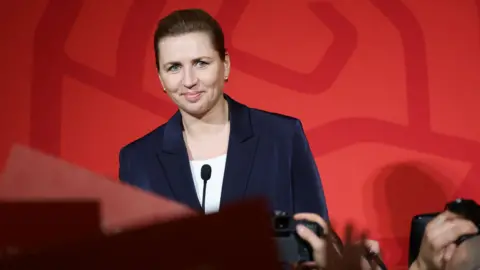
In a significant political shift for Denmark, Prime Minister Mette Frederiksen's Social Democrats came out on top in the country's latest general election, albeit with their weakest performance since 1903. Securing just 21.9% of the votes, Frederiksen's party fell short of the 90 seats necessary to form a governing majority.
Since 2019, the Social Democrats have held power, and following the election, Frederiksen addressed her supporters, expressing regret for not achieving a better result. Despite the disappointment, she proclaimed, There is nothing today that can make me sad that the Social Democrats have once again become the Danes' absolute favourite political party.
In what was a close-run race, the Social Democrats' main rival, the Liberal party Venstre, also recorded its worst electoral showing in a century, grabbing only 10.1% of the vote. As it stands, the 'red bloc' of left-wing parties has a slight edge over the 'blue block,' claiming a total of 84 seats to the right-wing coalition's 77. However, both coalitions have fallen short of the 90-seat threshold required for a dominant position in Denmark's 179-seat parliament.
Amidst the ongoing negotiation processes that may extend for days or weeks, Frederiksen still has opportunities for potential coalitions. The Moderates, a smaller party securing 14 seats, hold considerable influence in potentially deciding the new government.
In a post-election statement, Frederiksen reiterated her readiness to guide Denmark through its challenges, stating, I have been responsible for this wonderful country for almost seven years. I am still ready to take on responsibility as Denmark's prime minister. The Danish electorate, deeply concerned with domestic issues including the cost of living, the economy, and environmental impacts stemming from agriculture practices, now awaits the political landscape that emerges in the aftermath of this contentious election.