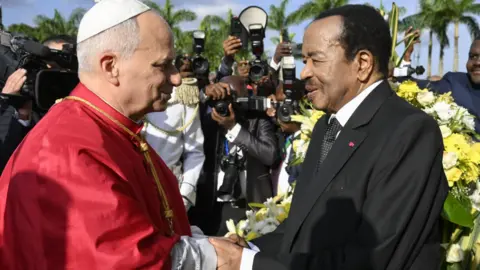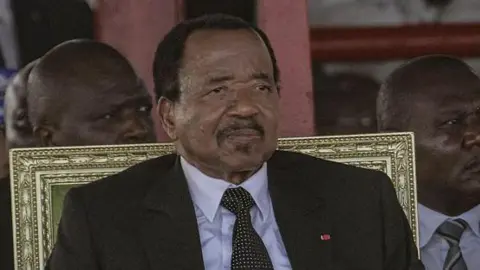
Cameroon's President Paul Biya, the world's oldest leader at 93, is set to appoint a vice-president for the first time in his 43 years of rule following controversial constitutional changes approved by parliament.
The vice-president will automatically assume the presidency should anything happen to Biya, allowing that individual to complete the remaining term before a new election occurs.
Previously, this position was eliminated in 1972, leaving the Senate leader responsible for temporarily taking over until fresh elections were assumed.
Opponents of the amendment argue it was hastily assembled and serves primarily to consolidate power. One senator from Biya's party described the legislative process as suspicious amid ongoing private speculation about Biya's health, which is rarely discussed openly.
A joint parliamentary session recently passed the bill, with 200 lawmakers voting in favor and only 18 against.
Supporters of the amendment claim it will enhance governmental efficiency by providing a clear line of representation when the president is unavailable for any reason.
Prior to this amendment, the Senate leader was required to serve in a caretaker capacity in the event of a presidential incapacitation—a role that often detracted from the Senate's legislative duties.
The final approved amendment mandates that the vice-president, appointed rather than elected, will take over as head of state for the remainder of the seven-year presidential term.
The changes have faced criticism for lack of broad consultation, particularly from the Social Democratic Front (SDF) party, which boycotted the vote. The SDF advocates for a dual election between the president and vice-president and a constitutional provision recognizing the linguistic balance between English and French-speaking regions, which has been contentious historically.
SDF chairman Joshua Osih characterized the situation as a "missed historic opportunity," while Maurice Kamto from the Cameroon Renaissance Movement dubbed the constitutional change an institutional coup.
This move comes against the backdrop of continuous discussion regarding President Biya's future amidst allegations of electoral irregularities, raising further questions about governance stability in Cameroon.