In brief
This article chronicles the metamorphosis of Bombay into a bustling metropolis, showcasing key historical moments and the diverse narratives that have defined the city. It highlights an exhibition titled 'Bombay Framed' that captures the city’s dynamic past through art and photographs, emphasizing its complexities and contradictions.
From seven islands to a city of 20 million, Bombay (now Mumbai) has been shaped over centuries by political, economic and social forces.
From Koli fisherfolk to colonial planners, and from Bollywood stars to textile barons, many have shaped the western Indian city's landscape and identity.
The city is ever-evolving, the past giving way to the future, birthing new guises and blurring the old. From fishing nets to ports and mills to malls, Bombay has constantly reinvented itself and remained a city in flux.
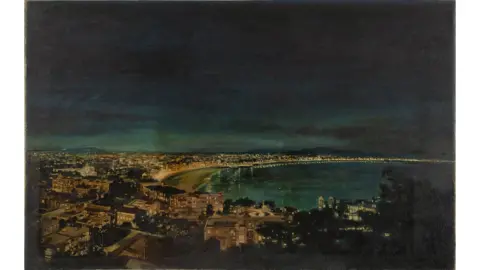
A new exhibition 'Bombay Framed' charts the city's shape-shifting passage through the centuries using a stunning array of paintings, photographs and multimedia prints.
Over 100 images spanning three centuries document the city in its full diversity, from Zoroastrian merchants to ordinary citizens. As curator Gyan Prakash states, the city itself is a kind of artwork: layered, complex and made up of many different experiences.
According to Prakash, significant moments in Bombay's evolution include the 1830s and 40s when reclamations merged the seven islands into a single city, and the 1860s, when imperial architecture began to define the city's skyline. The 20th century saw the rise of Art Deco structures along Marine Drive, symbolizing modernization.
However, past and present coexist in contrast; luxury towers rise alongside shantytowns, modern mills exist near ancient caves. The city is marked by extremes, embodying both grand history and day-to-day realities of its citizens.
The exhibition 'Bombay Framed' is more than just visual storytelling; it aims to give voice to the everyday lives of its diverse inhabitants, reminding us that Bombay's soul is animated by its people.
With a politically charged history around its name - officially changed from Bombay to Mumbai in the mid-1990s - the exhibition takes a neutral stance, reflecting the city's complex identity formed by multiple perspectives.